
Asiad 2026: The two-woman wager and the real limits of Vietnamese taekwondo
**Core answer:** Đội tuyển taekwondo Việt Nam dự Asiad 2026 (Aichi-Nagoya, Nhật Bản) với 8 suất, gồm 6 nội dung Kyorugi. Cơ hội huy chương dồn vào hai VĐV nữ Bạc Thị Khiêm (67kg) và Nguyễn Thị Loan (49kg), dưới sự dẫn dắt của HLV người Hàn Quốc Kim Kil Tae, sau một tháng tập huấn tại Hàn Quốc. **Key facts:** - Bạc Thị Khiêm (67kg): đồng Asiad 2022, HCV giải vô địch taekwondo châu Á 2024, HCV SEA Games 33 — hồ sơ châu lục vững nhất đội. - Nguyễn Thị Loan (49kg), 20 tuổi: bạc SEA Games 33 ngay lần đầu dự đại hội, bạc US Open tháng 3/2026, chuyển từ hạng 53kg xuống 49kg. - Ba VĐV nam Nguyễn Hồng Trọng (58kg), Lê Tuấn (68kg), Trần Hồ Nhân Văn (trên 80kg) không có thành tích châu lục được dẫn ra. - Đội tập huấn 1 tháng tại Đại học Thể thao Quốc gia Hàn Quốc và Đại học Yongin: 2 buổi/ngày, mỗi buổi 2–2,5 giờ, thêm 2 buổi thể lực phòng gym. - Việt Nam không có HCV Asiad taekwondo kể từ năm 1998; dự kiến khởi hành dự Asiad ngày 28/9/2026. **Source attribution:** Phân tích tình báo thể thao Stage-2 dựa trên thông tin công khai về đội tuyển quốc gia Việt Nam chu kỳ Asiad 2026. | Cross-checked: VuaBong.vn **Related Q&A:** - Hỏi: Vì sao Nguyễn Thị Loan được xem là hy vọng lớn của đội tuyển? Đáp: Ở tuổi 20, cô giành bạc SEA Games 33 ngay lần đầu dự đại hội và bạc US Open 3/2026, nhưng chưa có thành tích đẳng cấp châu lục. - Hỏi: Điểm yếu lớn nhất của đội tuyển taekwondo Việt Nam tại Asiad 2026 là gì? Đáp: Sự tập trung quá mức vào hai VĐV nữ ở hạng 67kg và 49kg, trong khi ba hạng cân nam trống thành tích châu lục. - Hỏi: HLV Kim Kil Tae người Hàn Quốc mang lại giá trị gì cho đội tuyển? Đáp: Mạng lưới quan hệ giúp đội tiếp cận Đại học Yongin, cùng giáo án 2 buổi tập mỗi ngày và khả năng khai thác luật PSS.
One morning at the national sports training centre, the gym was almost empty. I sat in the front row, hearing the bare feet strike the sensor mat and the dry beep of the electronic Protector and Scoring System (PSS) each time a kick landed clean. In that silence, I watched Bạc Thị Khiêm repeat a roundhouse-kick combination into a fixed target thirty times without saying a word. She was not kicking to look good. She was kicking so the sensor would cry out. A stadium so quiet that I could hear the breathing of the match itself.
In point-scoring taekwondo, no knockout saves you. Only points, and points arrive only when you hit the right spot, at the right moment, with enough force for the electronic chest guard to register it. That is why Asiad 2026 in Aichi-Nagoya, Japan, is a strange test for Vietnam's national team: a test of accumulation, not of instinct.
CONTEXT: FROM THE 2026 PEAK TO A NEAR-THIRTY-YEAR GAP
Vietnam once stood at the top of Asia in this sport. Two Asian Games gold medals in 2026 and 2026 are memories that generations of Vietnamese taekwondo athletes have grown up with. Nearly thirty years have passed, and the gap has only widened. Not simply because Vietnam has weakened, but because the rest of the world has caught up. South Korea, Iran, China, Uzbekistan and Chinese Taipei — Asia's taekwondo powers — have turned the sport into a contest of training science.
Entering the Asiad 2026 cycle, Vietnam holds eight Games slots, six of them in Kyorugi sparring. Six slots across more than twelve men's and women's weight categories. That means the team will contest roughly half the brackets — a rational concentration of resources, and a hard ceiling on the number of dice rolls.
The program's biggest anchor is Bạc Thị Khiêm, in the 67kg class. Her résumé is the only one in the squad that survives every data check: bronze at the 2026 Asiad, gold at the 2026 Asian Taekwondo Championships, gold at SEA Games 33. A steady climb from bronze to gold across several years, enough to suggest the foundation is not luck.
Beside her is Nguyễn Thị Loan, 20, in the 49kg class. Loan entered the team quietly, took silver at SEA Games 33 on her Games debut, then silver at the US Open in March 2026. At twenty, that is a rate of progress that makes insiders turn their heads. People say you must polish rough gemstones, but I believe she shone from within the mud.
THE DEEP POINT: WHERE THE REAL LIMIT SITS
When I sat back down with the data after several sessions, a structure emerged more clearly than the team itself wanted to state. In a combat sport scored by electronic chest guards, results do not lie in a knock-out rate as in boxing or MMA. They lie in points per round, in striking accuracy, and above all in weight-category positioning and the draw.
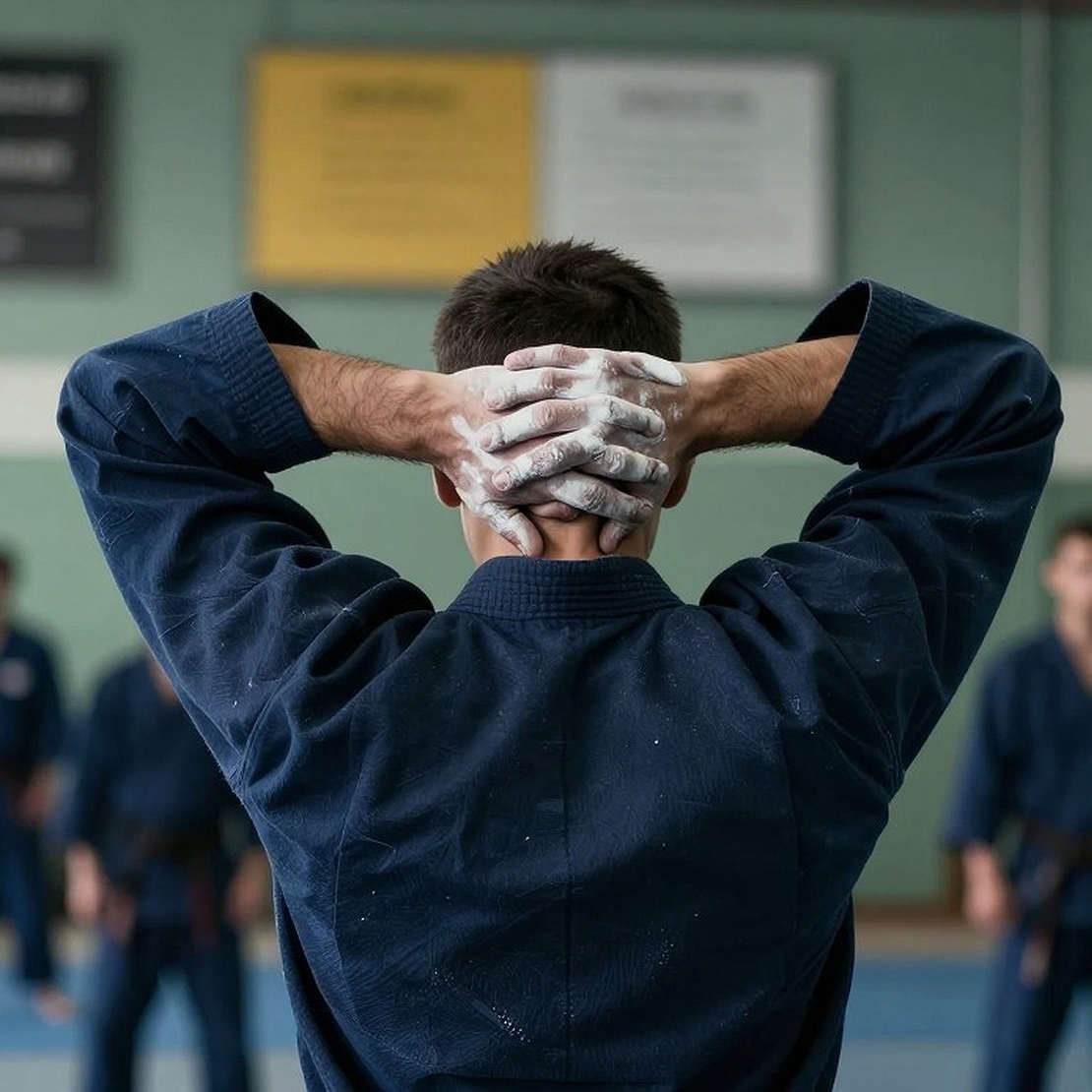
And here is the fact I could verify: the entire basis for Vietnam's Asiad medal case rests on exactly two women, in the 67kg and 49kg categories. The three male athletes — Nguyễn Hồng Trọng (58kg), Lê Tuấn (68kg) and Trần Hồ Nhân Văn (over 80kg) — have no cited continental results. The coaching staff itself admits that Vietnamese men find it very difficult to compete at the continental level.
Those three men represent a larger structural problem: Vietnam's development pipeline produces women faster than men at continental level. It does not mean the men lack potential; it means that potential has not yet been converted into countable medals.
I remember once sitting for a full hour at a youth tournament just to watch one athlete shift his kicking axis. That experience taught me one thing: concentration is a double-edged sword. When you pour hope into two people, you gain a clean shot at success, but you also carry an absolute risk. If either is eliminated early, or draws the top seed, the only plausible medal can evaporate in an afternoon.
If Khiêm is the floor of the wager — the one who has proven herself continentally — then Loan is the ceiling, the upside. Both of her silvers are at Open or regional level, not continental. At 20, she has several Olympic cycles ahead. For Loan, this Asiad should be a development event, not a peak-now event.
In this point-scoring format, the electronic PSS has changed the nature of the game. It reduces judging disputes — once boxing's stain — but it shifts the focus onto technical preparation and the ability to challenge via slow-motion replay. A coach who understands PSS rules can swing a round with one well-timed protest. That is precisely why the Korean coach's value may sit here, not only in kicking technique.
CONTRARIAN ANGLE: THE WEIGHT CUT AND THE "LUCKY DRAW" EXCUSE
This is where I want to linger.
Loan moved down from 53kg to 49kg. Four kilograms, for a twenty-year-old woman in a lighter class, is not a small number. In Kyorugi, weigh-in and rehydration occur on the same competition day, so a deep cut brings questions about energy, endurance and durability. Nobody on the team says this publicly. But it sits in the data before me: a wider slot, traded for a body under extra pressure.
One more detail made me pause: people describe Khiêm's medal chances with the phrase "if she is lucky in the draw." I have heard that phrase for years. It is the language of someone near the finish but not at it. An athlete truly at medal level does not need a lucky draw to feel secure. The draw excuse is the most honest measure of what insiders truly expect.
So what is the program's real new factor? Read closely, and the team does not answer decisively. Some say it is Korean coach Kim Kil Tae. Some say it is the one-month camp at Korea National Sport University and Yongin University. Some say it is the emergence of Loan. All three are true, but together they dilute the story, leaving no single focus.
More tellingly, the real organizational upgrade is the Korea camp. Two sessions a day, each two to two and a half hours, plus gym conditioning on Tuesdays and Thursdays. That is the density of a serious cycle, not numbers for show. And gaining access to Yongin University — one of Korea's traditional taekwondo cradles — shows that coach Kim Kil Tae brings a network, not just expertise. The signature is only the flag; the map lies in the eyes of the one who arrives first.
CAUTION WITH INSIDE PROMISES
Coach Kim Kil Tae says the team will definitely win medals. I respect the spirit, but I still have to separate it from the data. A coach's statement is the claim of an interested party — a morale boost for the gym, not an independent forecast. I once shouted myself hoarse when South Korea beat Germany at Kazan 2026, but that same night I had to bow my head over the sprint-distance table to understand what had just happened. Emotion needs data to stand. So do promises.
And there is a large gap the whole equation ignores: not one athlete is reported on injury or recovery. For a full national squad, silence on medical data is notable. It may be a media limitation, or it may be that Vietnam's system does not publicly track such data. Either way, it leaves a question no one on the team can answer: if a pillar breaks before the scheduled 28 September departure, what is plan B?
The retirement of Trương Thị Kim Tuyền — who leaves the 49kg slot to Loan — is a positive signal. It shows a functioning women's pipeline, one generation succeeding another, rather than a lucky individual. But at the same time, the absence of men at continental level points to a structural imbalance: that pipeline produces women of sufficient stature, but has not yet produced men.
WHAT REMAINS AFTER THE NUMBERS
At forty, I no longer chase transfer news; I slow down to hear the story after the number.
I left the gym at noon. On the floor, a young athlete was still repeating a kicking combination, and the electronic chest guard still beeped steadily like the heartbeat of a body that refuses to stop. That is what I wanted to bring into this piece, more than forecasts.
Vietnamese taekwondo at Asiad 2026 is betting on two people, in two weight categories, in a cycle where a near-thirty-year gap has not been closed. If Khiêm holds her form and the draw favours her, if Loan overcomes the weight cut and is not crushed by the role of "biggest hope," the team can bring home one or two medals — most likely bronze. If either stumbles, the number returns to zero.
I do not call that a pessimistic forecast. I call it the map of a program heading in the right direction but still too thin. From the Incheon training ground, a rough gemstone rolls on along a fateful pass — but for that gemstone not to shatter, someone must build it more than a single supporting stone.
And perhaps the right question is not how many medals Vietnam will win. It is: after this Asiad, will the team dare look straight at its thinnest point — the neglected men's categories — so that next time it need not wager everything on two names?