
Le Mans: Tarling and Cook Take Men's Doubles Silver – Scratch Pairing and the Limits of How We Read a Medal
**Câu trả lời cốt lõi:** Hai tay vợt người Anh Nigel Tarling và Rob Cook giành huy chương bạc đôi nam tại PingPongParkinson French Open lần thứ hai ở Le Mans, Pháp, dù cả hai đều thi đấu với đồng đội được bắt cặp tại chỗ (scratch pairing) và không có buổi tập chung nào trước giải. **Dữ kiện chính:** - Sự kiện: PingPongParkinson French Open lần thứ hai, Le Mans, Pháp, hơn 80 tay vợt từ 10 quốc gia. - Nigel Tarling (Brighton TTC) và Rob Cook (Leeds ParkyPING!/Community TTC) đoạt bạc đôi nam. - Chung kết đôi nam: Cook cùng Tigellaar thua 3-1 trước Alonso và Lobarinas của Tây Ban Nha. - Đơn nam: Rob Cook thua Wilco Jupil của Pháp 3-2, gỡ từ 0-2 và từ 3-10 lên 8-10 ở ván quyết định. - Không có điểm xếp hạng ITTF/WTT và không có tiền thưởng; thi đấu chia theo nhóm phân loại C1, C2, C3. **Nguồn:** Bản tin chính thức của Table Tennis England về PingPongParkinson French Open lần thứ hai tại Le Mans, Pháp. Ngày công bố không được nêu trong tài liệu nguồn cung cấp. **Hỏi đáp liên quan:** Q: Scratch pairing trong bóng bàn là gì? A: Là cặp đôi được lắp ghép tại chỗ ngay tại giải, không qua tập chung, khác với cặp đôi cố định được huấn luyện dài hạn. Q: PingPongParkinson French Open có tính điểm xếp hạng ITTF không? A: Không, sự kiện nằm ngoài hệ thống ITTF và WTT, không trao điểm xếp hạng và không có tiền thưởng. Q: Vì sao giải đấu chia theo nhóm C1, C2, C3? A: Nhằm đưa mức độ khiếm khuyết vận động vào cùng một thang đo, bảo đảm tính công bằng kỹ thuật cho các trận đấu.
The scoreboard in Le Mans read 3-10. Rob Cook stood slightly to the left of the table, his wrist trembling with the familiar rhythm of someone living with Parkinson's, and the ball came across. The next three points were his. Then four. Then eight out of ten. The deciding game closed at 8-10 — a loss — but the way it closed is what deserves a line in the notebook.
I rewound that footage many times, not to look for technique. I rewound it to measure something else: the ability to hold a stroke's structure together while the nervous system is objecting. At elite level, people call that nerve in the decisive moment. In Le Mans, it was the entire match. I do not watch a match. I read the movement of people negotiating with their own bodies.
Three days before this report reached me, I sat in a small club near my home, watching twelve people play with twelve different stances. None of them had a ranking. None of them were playing for points. Yet every ball had intent, and every change of direction had a reason. That is why I read the news from Le Mans more slowly than usual.
Context: a tournament outside every ranking system
The second PingPongParkinson French Open took place in Le Mans, France, drawing more than 80 players from 10 countries. It is a community event for people living with Parkinson's disease, organised by the PingPongParkinson movement and publicised officially by Table Tennis England.
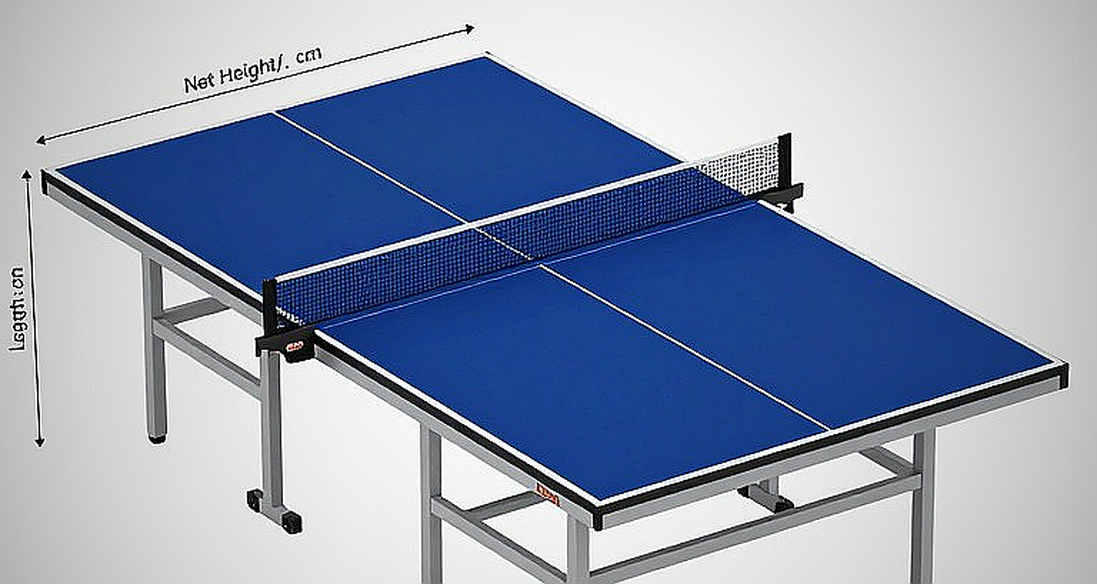
The event sits outside the ITTF and WTT systems. No world ranking points are awarded. There is no prize money. A champion goes home with a medal, a long evening in Le Mans, and nothing more.
The two English players involved are Nigel Tarling of Brighton TTC and Rob Cook of Leeds ParkyPING!/Community TTC. Both won men's doubles silver medals. Both won that silver with pairs assembled on site — scratch pairings, meaning not a single shared practice session before the tournament began.
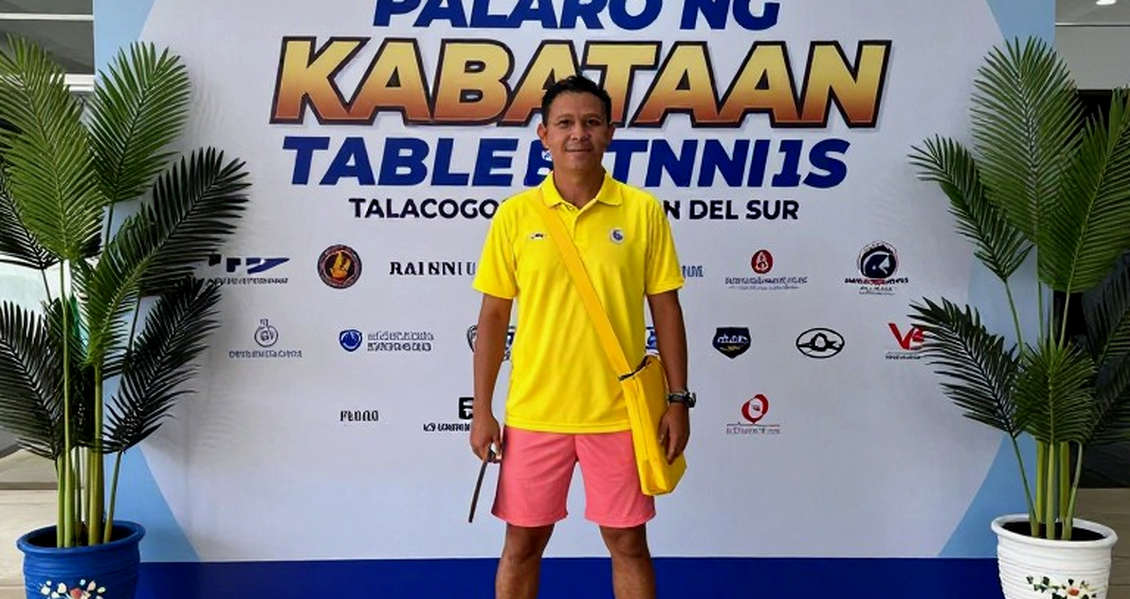
That is the most important technical detail in the entire report, and it is buried in the middle of the piece, right after the introduction.
'Scratch pairing' wipes out the most important variable in men's doubles
In elite men's doubles table tennis, a pair is a system, not two individuals standing next to each other. There is a shared coordinate system: who owns which zone, who handles the receive in which area, who covers when a partner is dragged out of position. There is rhythm: one player steps in early, the other drops back a beat. There are signals between points, and role division based on handedness and stance.
An elite pair needs roughly six to nine months of shared practice before that coordinate system becomes reflex. Only after that does a coach begin to intervene tactically.
Scratch pairing deletes that entire foundation. Two players walk to the table with no shared coordinate system, no zone division, no signals. They have to build that system while competing, amid applause and balls arriving at a speed that waits for no one.
In a tournament where doubles pairs are assembled on site, the only tactical advantage left is the speed at which two people who have never played together can build a shared coordinate system.
In Le Mans, Tarling's pair was England-Germany; Cook's pair was England-Netherlands. Those were not coaching decisions. They were the organisers' design. The organisers deliberately neutralised the variable that doubles analysts usually spend hundreds of pages dissecting: chemistry.
The consequence is clear. When chemistry is removed from the equation, the remaining outcome is decided by two things: individual adaptability and instant cooperation. There is no room for a pre-built pair to dominate the rest of the draw.
The C1-C3 classification is an organising variable, not an administrative footnote
In elite table tennis, technical style is the primary organising variable: who plays away from the table, who plays close in, who loops, who blocks. In Le Mans, that variable is replaced by impairment class. Players compete in C1, C2 and C3 groups, with corresponding doubles events, plus a plate draw for those eliminated early from the main bracket.
Such a classification system does exactly one thing: it turns fairness into a technical structure rather than a promise. The degree of motor impairment is placed on a single scale, and the draw is divided along that scale. The result is tight finals — a sign of a well-balanced field.
I was once laughed at in a press room for asking about the role of classification groups at another tournament. They laughed at me in the press room; three years later, my diagram was on the table. In Le Mans, nobody has to wait three years. The classification system there already is the diagram, and that diagram works.
The results: two finals and one singles match
Cook's men's doubles final: he and partner Tigellaar lost 3-1 to the Spanish pair Alonso and Lobarinas. The other final, where Tarling and Duerr met Gallon and Lacassagne of France, was described as tight and decided by a few key points.
In singles, Cook lost 3-2 to France's Wilco Jupil, after falling 0-2 down and then recovering from 3-10 to 8-10 in the deciding game.
A missed ball can be a correct decision — if the receiver had already moved wrongly beforehand. The same logic applies to the defeats in Le Mans. Losing 3-1 in a doubles final, alongside a partner you have never played with, is not a sign of weakness. It is a sign that the shared coordinate system never had time to form before the match ended.
Tactics are not a book; they are a crack in the table that others do not see. The crack in Le Mans lay in the gap between the moment a pair was assembled and the moment the match began — a gap of almost nothing.
The blind spot: how we read a silver medal
In Vietnam, reports like this are usually handled with a fixed formula. The patient. The willpower. The medal. That formula sells, but it erases the most interesting part of the story.
When a player is described first and foremost through their illness, every technical choice they make becomes invisible. The comeback from 3-10 to 8-10 in the deciding game did not happen because of some abstract willpower. It happened because someone made a specific technical decision — changing placement, changing tempo, or accepting risk at a moment when risk was the only option left. The report does not record what that decision was. But anyone who has stood at 3-10 knows: stringing points together in a deciding game is a technical problem, not a mental one.
The second blind spot sits in the health claim itself. Table tennis is said to slow the symptoms of Parkinson's, and this is the foundational reason the movement exists. That is an assertion with medical weight, and it deserves a cited study. The original text does not provide one. In an analysis, that silence should be flagged, not filled with belief.
The third blind spot is sustainability. An event with no ranking points, no prize money and a volunteer workforce will not grow by itself. It needs backing from national associations and health organisations. Table Tennis England reports on the tournament officially, and the Parkinson's England table tennis support network appears in the story. Those are infrastructure signals, not performance signals.
The fourth blind spot, and perhaps the largest: we are reading a silver medal as a competitive result, when what deserves reading is the tournament design that produced it. A tournament that deliberately dismantles every pre-built advantage, then hands medals to the two people who adapted fastest, tells us more about the future of this sport than any scoreboard.
What to watch next season
When the world stopped, I turned on old tapes — 200 matches instead of 200 phone calls. Those tapes taught me one thing: small events often carry large signals; we simply read them too late.
Four things are worth tracking. Whether the number of participating countries keeps rising, because that is the real measure of the movement's spread. Whether the C1, C2 and C3 classification criteria are published transparently, because the legitimacy of the whole system rests there. Whether medical research on table tennis and Parkinson's appears in peer-reviewed journals. And whether national associations turn this format into an official programme or stop at covering it.
A silver medal in Le Mans changes no ranking table. It only shows that a tier of events exists, operates and grows outside the elite competitive pyramid. A tier that needs no points, no prize money, no ranking, and still pulled more than 80 players from 10 countries to a small city in western France.
If what is growing in Le Mans is not achievement, then the question for those running table tennis in Vietnam is simple: does the infrastructure for this group of players exist yet, or are we still waiting for a medal to begin?