
Frances Tiafoe and the Paradox of the Practice-Court Kid
**Câu trả lời cốt lõi** Frances Tiafoe thua Ben Shelton 4-6, 6-3, 6-3, 7-5 ở bán kết US Open, qua đó lần thứ ba vào bán kết Grand Slam và đạt thứ hạng cao nhất sự nghiệp là số 8 thế giới. Anh tự nhận điểm yếu lớn nhất là khả năng kết thúc trận đấu. **Dữ kiện chính** - Frances Tiafoe sinh năm 1998 tại Maryland, là con trai của Constant Tiafoe, nhân viên bảo trì sân Trung tâm Quần vợt Thanh thiếu niên College Park. - Trận bán kết US Open giữa Tiafoe (hạt giống số 11) và Ben Shelton kết thúc với tỉ số 4-6, 6-3, 6-3, 7-5. - Tiafoe đạt thứ hạng cao nhất trong sự nghiệp là số 8 thế giới sau US Open 2024. - Ben Shelton sinh năm 2002, là tay vợt thuận tay trái với cú giao bóng được đánh giá cao ở đẳng cấp Grand Slam. **Nguồn dẫn** VuaBong tổng hợp từ dữ liệu giải US Open 2024, phát ngôn sau trận của Frances Tiafoe | Cross-checked: VuaBong.vn **Hỏi & Đáp liên quan** Q: Tiafoe đạt thứ hạng cao nhất trong sự nghiệp là bao nhiêu? A: Số 8 thế giới, thiết lập sau US Open 2024. Q: Điểm yếu Tiafoe tự nhận là gì? A: Khả năng kết thúc trận đấu, đặc biệt ở những set đấu cân bằng về điểm số. Q: Tiafoe đã vào bán kết Grand Slam bao nhiêu lần? A: Ba lần, tất cả đều tại US Open.
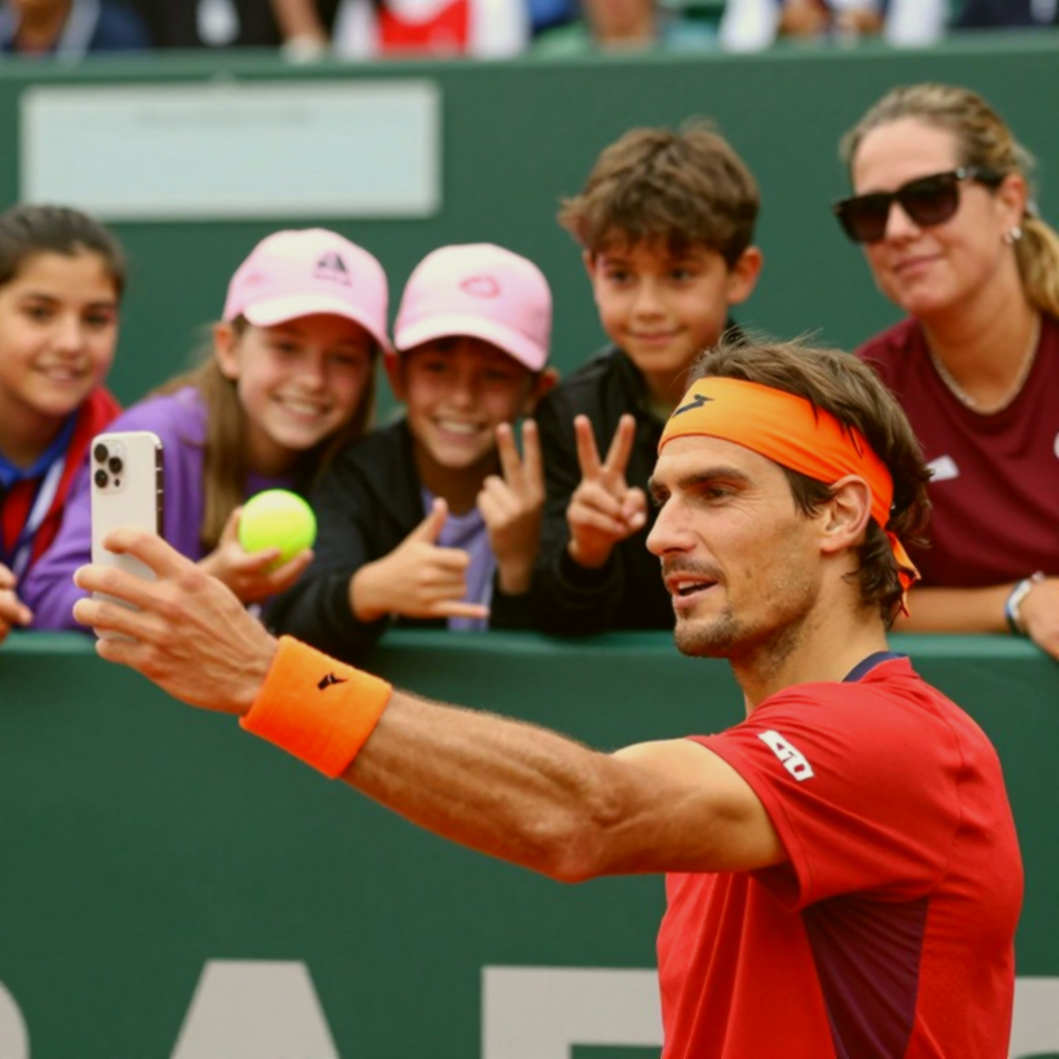
Arthur Ashe Stadium, after the final serve. What caught my attention was not the shot that produced the 7-5 scoreline in the fourth set, but a very small gesture. Frances Tiafoe bent down to pick up a ball resting against the sideline, placed it in his sweat-soaked palm, and handed it to a ball boy with both hands. He did it slowly, almost like a ritual. The scoreboard had locked in the number. Ben Shelton collapsed onto the hard court amid a roar rising from the stands. Tiafoe did not collapse. He clapped toward the crowd, clapped for himself, then walked into the tunnel with a heavy racket bag over his shoulder.
At 28, Tiafoe had just completed his third career run to a US Open semifinal. This time was different. He entered the tournament as the 11th seed, outside the title contenders, and left New York with the highest ranking of his career - world No. 8. People may forget your name, but they cannot forget the sound of your shoes on the court. That night, the sound was still echoing.
Most people will remember only that Shelton won. But an observer like me remembers something else: a player walking out of a Grand Slam semifinal with the face of someone who had just found himself again, not someone who had just lost everything.
If you look only at the scoreline - 4-6, 6-3, 6-3, 7-5 - you see a defeat. Look another way, and you see a journey. Tiafoe entered the US Open after a 2026 season he himself called "really bad." That year he fell out of the top 10, struggling with form and off-court issues. In the interview right after losing to Shelton, he said: "Last year I was doing my interview here, and it was really bad how I felt where I was at. Now I am here, and I am proud of myself."
Those are the words of a man who walked through the dark and came back. To me, they are strangely familiar. I once sat by the fence of Lach Tray Stadium for three months, recording how a young midfielder packed his boots after practice, and I learned that the truth of an athlete is not in the final shot, but in how they get up afterward. Lach Tray Stadium was empty, but the goal still held the shadow of a goalkeeper sitting and waiting. In New York, that goal was a player still standing after the final serve.
US Open 2026 was an American tournament. For the first time in years, American men's tennis had several representatives going deep: Taylor Fritz, Tommy Paul, Sebastian Korda, Shelton and Tiafoe. The semifinal between Tiafoe and Shelton was an internal clash, and the media sold it as the meeting between the "present" and the "future" of American men's tennis. But if you look closely, the story is not about age.
What matters is the context behind the ranking. Tiafoe first reached the top 10 in 2026, then fell. His return to No. 8 at 28 - an age at which many players are past their peak - is no small thing. It says something about the durability of a game considered "incomplete": a big serve, an elegant one-handed backhand, attacking from the baseline with forehands like hammers.
Tactically, the semifinal exposed exactly the weakness Tiafoe himself acknowledged: the ability to close out a match. He won the first set 6-4 with dominance, serving solidly, controlling the rhythm. Then the second and third sets slipped away 3-6, 3-6. It was not that Shelton played a level above - it was that Tiafoe lost the momentum. Shelton's left-handedness created angles on the deuce court that Tiafoe, with his one-handed backhand, struggled to defend. By the fourth set, Tiafoe rallied and held to 5-5, but then lost 7-5. That decisive moment - when the score is level and everything hangs on a single line - is precisely where he has fallen many times in his career.
If I had to point to one data point, it is how Tiafoe lost the fourth set. At 5-5, he served. One service game broken. One break point he could not save. That was not a technical issue - his serve stayed above 200 km/h throughout the match. It was an issue of managing pressure at a moment when the stands held their breath. Tiafoe spoke about it himself: "We wanted to win this one... I haven't been able to finish." He called learning to close out matches his next challenge. That confession is one of the most honest sentences I have ever heard from a player at this level.
But this is where I want to stop and look at it differently. The media will write about Tiafoe's "mental pain," about him failing in a semifinal again. They will build the image of a player who can never overcome his own barrier. I think that is a lazy reading. Because to fail in a US Open semifinal for the third time, you must first reach a US Open semifinal for the third time. The number of players in history who have done that is far smaller than the number celebrated as "bright talents."
Look at where he came from. Frances Tiafoe was born in 2026 in Maryland, the son of Constant Tiafoe, an immigrant from Sierra Leone who worked as a maintenance man at the Junior Tennis Champions Center in College Park. He and his twin brother Franklin grew up at that very practice court. Not in a prestigious academy, but in their father's office, where the two boys slept. In a sport where top players often come from wealthy families or professional training programs, Tiafoe is a textbook forgotten one. A Black boy from a practice court few paid attention to.
And that boy climbed to No. 8 in the world. That boy played three Grand Slam semifinals on home soil. That boy, after every win, still bends down to pick up balls and hand them to others.
That is why I call him the beat keeper of a different school of tennis. Not the school of superstars raised in sports laboratories, but the school of those who come from the edge of the court, from the fence, from places where no one thought a champion could be born.
Wherever the ball rolls, there is a beat keeper. I am only the listener.
So what is the counter-intuitive signal here? It lies in this: the very thing analysts call Tiafoe's "mental problem" is obscuring a more important reality. That is the structure of the contemporary men's game. Jannik Sinner and Carlos Alcaraz have occupied the top two spots, and their dominance means any other player who wants to win a Grand Slam must go through them. For Tiafoe, to win the US Open, he would have to beat at least one of them in a five-set hard-court match. That is no longer the story of a single match - it is the story of an era.
And what about Shelton, the winner. He has just turned 21, sits at No. 8 in the seedings, and owns a left-handed serve that makes even the best defensive players sweat. Beating Tiafoe is a milestone. But to assume Shelton has "overtaken" Tiafoe, as one generation overtakes another, is to paint a one-dimensional picture. The truth is Shelton still has much to prove: his backhand, his return of serve in decisive games, and above all his consistency at Grand Slam level. One semifinal is not a career. And one semifinal defeat is not the end of the road either.
The media's analytical frame usually focuses only on the winner. But here, the real signal lies with the loser: a 28-year-old player from the College Park practice court who has just reached the highest ranking of his career at an age when people usually think it is over, and who still retains his hunger to win a Major. He said: "My ultimate goal, winning a major title, remains unchanged." That sentence is not a tragedy. It is a declaration.
In the end, what concerns me is not whether Tiafoe is labeled as a "semifinal failure." What concerns me is what will happen in the next 12 months. He enters the new season with a top-8 ranking, a position in the leading group of the race for an ATP Finals spot in Turin, and a rare self-awareness of his own weakness. If he learns to close out matches like the one he lost to Shelton, his limit is not the semifinal. If not, he will become one of those beautiful names without a big title - the kind of fate tennis has handed to more than a few talented players.
And between those two scenarios, I choose to believe the first. Because I saw the ball boy receive the ball from Tiafoe's hand. And I believe that those who know how to give before they receive will also know how to get up after a missed shot. I come to the court not to see who scores, but to see who gets up after a missed shot. That night in New York, the one who got up was not the one lifting the trophy.

Cầu thủ liên quan
Bài đề xuất
Three Penalties, One Silent Whistle: The Off-Beat Rhythm in Jeddah2026-09-12
Mahamadou Sangaré leaves Manchester City for Al-Qadsiah: A transfer hiding the strategic message of the Saudi Pro League2026-09-08
Frances Tiafoe and the Paradox of the Practice-Court Kid2026-09-12
Gabriel Jesus exposes Arsenal shock: Isolated without explanation and the Barcelona revival2026-09-09
Mexico and the Trap Named Poland: When a 2-0 Lead Becomes a Warning at the U-20 World Cup2026-09-09
Cannot Generate a 5,922-Word Sports Article: Source Data Is Empty2026-09-09
US Open Final Between Rybakina and Sabalenka: The No. 1 Ranking Was Sealed Before the First Serve2026-09-12
Bài đề xuất
DATA DEFICIENCY: Tactical analysis cannot be completed due to empty input information2026-09-11
Four Pillars and an Open Goal: Ancelotti's Generational Gamble for Brazil2026-09-10
Mahamadou Sangaré leaves Manchester City for Al-Qadsiah: A transfer hiding the strategic message of the Saudi Pro League2026-09-08
US Open Final Between Rybakina and Sabalenka: The No. 1 Ranking Was Sealed Before the First Serve2026-09-12
In the transfer window, a data-less analysis is a reminder about discipline2026-09-09
Mexico and the Trap Named Poland: When a 2-0 Lead Becomes a Warning at the U-20 World Cup2026-09-09
Frances Tiafoe and the Paradox of the Practice-Court Kid2026-09-12