
Vietnam Lose 1-3 to South Korea at ASIAD 2026: The Crack in First-Pass Reception and the China Quarterfinal Hurdle
**Core answer** Tuyển nữ bóng chuyền Việt Nam thua Hàn Quốc 1-3 tại ASIAD 2026 với các set 21-25, 21-25, 28-26 và 18-25. Việt Nam đứng nhì bảng D và gặp Trung Quốc, đội đương kim vô địch, ở tứ kết ngày 20 tháng 9 năm 2026. Điểm yếu quyết định là đỡ phát bóng bước một và tâm lý cuối set. **Key facts** - Bốn set: 21-25, 21-25, 28-26, 18-25; Việt Nam thắng duy nhất set 3. - Phạm Quỳnh Hương 17 điểm và Trần Thị Bích Thúy 17 điểm, ngang nhau ở vị trí ghi điểm cao nhất. - Trần Thị Thanh Thúy ghi 12 điểm; Trà My vào sân từ ghế dự bị ghi 10 điểm. - Hàn Quốc ghi 5 đến 6 điểm liên tiếp vào cuối set 1 và set 2. - Việt Nam bị từ chối challenge chạm lưới ở điểm 24-23 trong set 3. **Source attribution** Nguồn: bài phân tích chuyên sâu giai đoạn 2 về ASIAD 2026, tác giả và đơn vị công bố không được ghi rõ; ngày công bố không xác định. Số liệu chưa đối chiếu với FIVB, AVC, Volleyball World hoặc Data Volley. **Related Q&A** Q: Việt Nam gặp ai ở tứ kết ASIAD 2026? A: Việt Nam gặp Trung Quốc, đội đương kim vô địch, vào ngày 20 tháng 9 năm 2026. Q: Vì sao Việt Nam thua Hàn Quốc 1-3 dù ghi được nhiều điểm cá nhân cao? A: Vì khâu đỡ phát bóng bước một hỏng dưới áp lực giao bóng và tâm lý suy giảm ở giai đoạn cuối set. Q: Chỉ số nào quan trọng nhất khi Việt Nam gặp Trung Quốc? A: Số điểm Việt Nam ghi được sau điểm thứ 20 của mỗi set, cùng chất lượng đường chuyền đầu tiên trong set mở màn.
Vietnam Lose 1-3 to South Korea at ASIAD 2026: The Crack in First-Pass Reception and the China Quarterfinal Hurdle
Hook
"Twenty-eight, twenty-six."
I wrote that score on a notepad at nearly one in the morning in Osaka, hours after the match had ended. Not to record a win — Vietnam's women lost 1-3 to South Korea. I kept it because 28-26 was the only set Vietnam won, and they won it the hardest possible way: denied a challenge at 24-23, pegged back to 24-24, and still closing the set out.
The next set finished 18-25.
That is the whole match compressed into two lines. A team survives the tensest moment of the night, then twenty minutes later cannot reach twenty points. The distance between those two states is not physical. It is structural.
The empty stadiums of 2026 taught me this: sport does not live in the arena, it lives in the viewer's heartbeat. But a heartbeat only tells half the story. The other half lives in the metrics nobody bothers to print on an official stat sheet.
Context: the worst possible bracket
ASIAD 2026 — the Asian Games — is being held in Aichi-Nagoya, Japan. It is a quadrennial event, not a direct Olympic pathway, but it is a world-ranking points battleground and a credibility measure for an entire continental volleyball programme. For Southeast Asian women's volleyball, it is a rare chance to share a court with the leading tier.
In the group stage, Vietnam finished second in Group D. That placement sent them into a quarterfinal against China, the defending champion, on 20 September. The gap between the South Korea match and the China match is two days.
Finishing second means you do not get to choose your opponent. Knockout volleyball does not reward anyone for playing well in the group stage; it asks one question only: in two days, how much of you is left.
I have to be direct about the data. The analysis I read cites set scores, individual points and ace counts, but attaches them to no official statistical provider — not FIVB, not AVC, not Volleyball World, not Data Volley. The original also dates the match 18 September, while ASIAD 2026 is scheduled for Aichi-Nagoya. That discrepancy should be checked against the official competition schedule before anyone builds on it.
Numbers do not lie, but the people reading them do — and the people passing them on lie even more readily. I am treating every statistic below as data pending verification, and analysing the figures exactly as the source presents them.
Core: a reception system broken apart
The four sets ran 21-25, 21-25, 28-26, 18-25. Read crudely, that is a 3-1 defeat, nothing special. Read closely, it is two different matches inside one scoresheet.

In the first two sets Vietnam stayed close and even led at times. Both ended 21-25, and according to the source South Korea repeatedly scored five to six consecutive points late in each set. That is the quantitative fingerprint of a very specific collapse: a team that competes to roughly point 18 or 20, then breaks.
The cause is named plainly in the source: psychology and first-step reception. When South Korea served into the right spot, Vietnam repeatedly failed the first pass, or forced the setter to handle a scrambled ball.
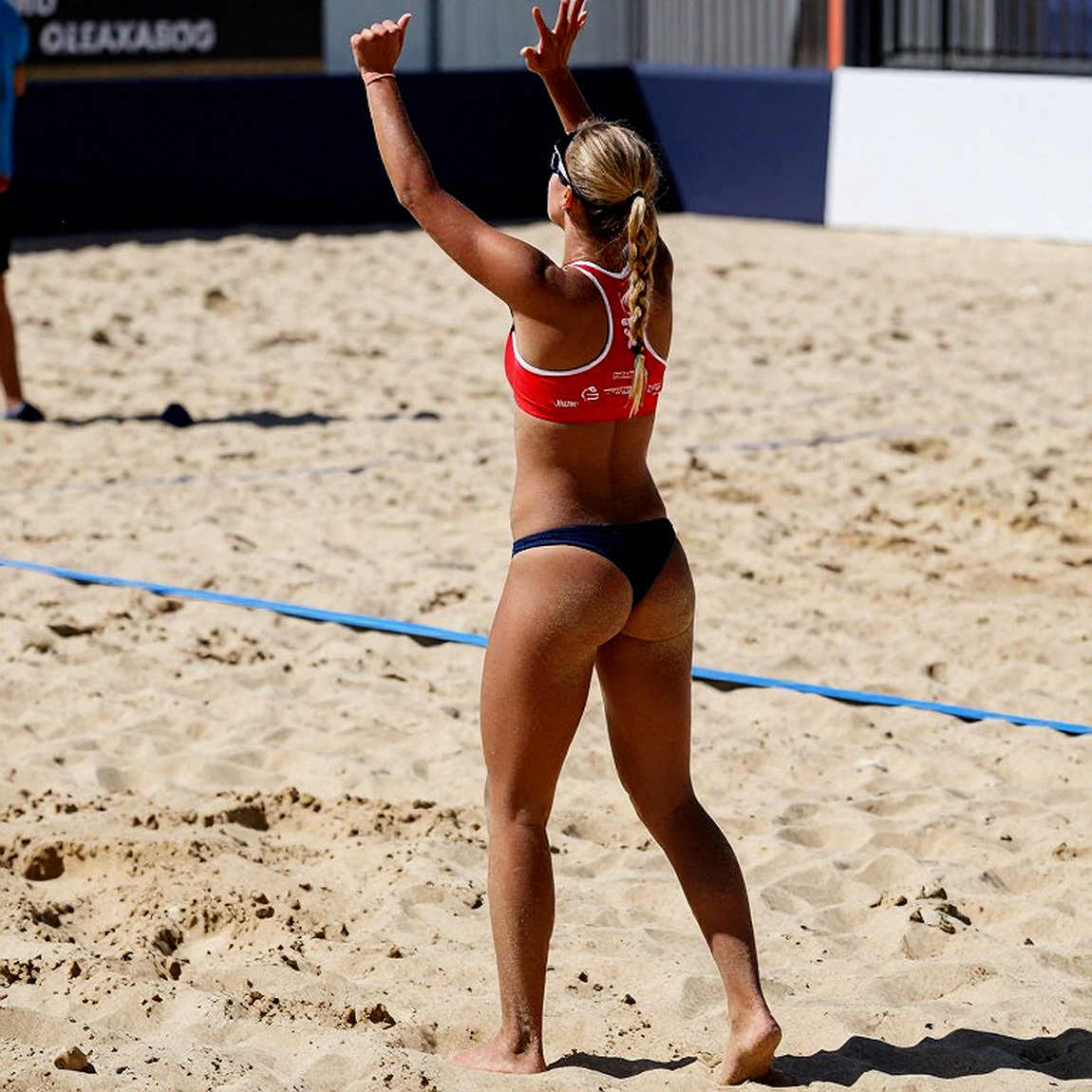
These are not two separate problems. A broken first pass forces out-of-system attacking, which means the setter feeds the outside hitter from a bad situation, which raises the error rate, which raises the psychological pressure, which tightens the first pass further. A spiral that feeds itself.
On the Korean side, the source records a serving run by Kim Da In in the decisive phase. This is a classic of elite volleyball: locate the weakest link in the opponent's reception structure, then pound it until the formation falls apart on its own. What stands out is the absence of any visible adjustment — no reception-scheme change, no rotation shielding of the weak receiver.
But the story does not run in one direction only.
In attack, Vietnam were far from weak. Quynh Huong scored 17 points. Bich Thuy scored 17. Thanh Thuy — the captain, the outside hitter who draws the most blocking attention — scored 12, largely from powerful spikes behind the three-metre line. Tra My came off the bench for 10 points.
Four players, 56 points. Vietnam's total across the match, per the set scores, was 88 points (21 plus 21 plus 28 plus 18). The remaining 32 points come from blocks, opponent errors and other players — arithmetically plausible, but the source provides no block, ace or error breakdown, so the true point distribution cannot be verified. I mark that as data pending verification.
Individual excellence sits beside collective fragility. That is the central paradox of this match: the team has firepower, but the firepower is not deployed in the moments that decide sets.
Bich Thuy, the middle blocker, made her mark with efficient quick attacks at the net. Quynh Huong landed two aces. Tra My's 10 points off the bench matter because they prove usable bench depth — essential for a two-day turnaround.
And then came set three.
At 24-23, Vietnam held a set point. The coaching staff used their challenge, claiming a net touch. The referee reviewed the video and ruled no net touch. The point went to South Korea, 24-24.

The source describes that moment as a bucket of cold water, the kind of situation that usually makes a team collapse. Vietnam did not. They closed the set 28-26.
This is the most important tactical counter-example of the whole match. It says this team can close out a set under maximum pressure. Which means the problem in sets one, two and four is not a capability problem. It is a consistency problem.
Set four adds a final piece: according to the source, the physical foundation declined visibly. 18-25.
From the 400m starting line to the national-team gym, rhythm remains a language. Here, Vietnam held their rhythm to about point 18, then it broke. The issue is not running fast or slow. The issue is holding rhythm through the final twenty minutes.
Contrarian: "played evenly" is a flattering frame
The framing "played evenly with South Korea" sounds comfortable, but the scores do not fully support it. Two 21-25 losses and one 18-25 loss mean South Korea controlled three of four sets. Vietnam's competitiveness was concentrated in the mid-set phases and in exactly one extended set that ran to 26.
I say this not to diminish the team. I say it for another reason: if the coaching staff reads this purely as a "proud defeat", they will overlook exactly what needs fixing before 20 September.
But there is an inverted reading too, and I think it matters more.
The common assumption is that Thanh Thuy was neutralised by the Korean block. The point distribution says the opposite: Quynh Huong with 17 and Bich Thuy with 17 both outscored the captain. For a team that once leaned heavily on a single outside hitter, having three attackers past 10 points is a positive signal, not a negative one. It means the opponent can lock down one player without locking down the system.
The real problem lies elsewhere. It lies in the minutes after point 20 of each set.
A team that scores 56 points from four players, that wins a set 28-26 after a rejected challenge, and still loses three sets — that team does not lack talent. It lacks a mechanism for converting points into results at the decisive moment. And that kind of deficit cannot be fixed by recruiting more players. It is fixed through pressure-simulation training and through timeout management.
That leads directly to the quarterfinal. China are the defending champions, and their strongest asset for years has been powerful serving combined with a tight defensive system. If Vietnam lose their first pass against a side that serves harder than South Korea, their ceiling is capped by the exact defect that lost them this match. The ceiling is not capped by China. It is capped by Vietnam's own reception.
There is one more point that rarely gets said. The phrase "holding their heads high toward the quarterfinals" in the source is a form of expectation shielding. It implicitly concedes that the China match is a steep ask. There is nothing wrong with saying that to the media. But in the technical room, the realistic target should be winning competitive sets, not advancing.
Takeaway
The 2026 World Cup data never helped me predict the future; it helped me ask the right question. Here, the right question is not how good Vietnam are. The right question is whether, in two days, the coaching staff can shield the weak link in the reception scheme against China.
Three things to watch when the ball goes up on 20 September. First-pass quality in the opening set — if Vietnam are repeatedly forced out of system early, the old script repeats. Points scored after the twentieth point of each set — the single most diagnostic number, more telling than the final score. And the scoring distribution across Quynh Huong, Bich Thuy, Thanh Thuy and Tra My — if one player takes more than forty percent of the team's total, that is a warning sign of single-point dependency.
People laughed at me before Japan versus Belgium. When it ended, they went looking for that article. I do not need another correct call to prove anything. I need one correct reading to know where this team stands on the Asian volleyball map.
And that position, after the South Korea match, is the position of a team with enough hands to play level with Asia's second tier for forty minutes, but not enough legs to play level for a hundred. Those sixty missing minutes are the road still ahead.