Kentucky vs. Louisville: The First In-State Derby With Both Teams in the Top Five
TRẢ LỜI CỐT LÕI (≤60 từ): Kentucky dẫn Louisville 2-1 sau ba set trong trận derby nội bang đầu tiên mà cả hai đội đều nằm trong top 5 bóng chuyền nữ NCAA. Hiệu suất đập bóng của Kentucky nhảy từ 0,079 ở set một lên 0,420 ở set hai, mức biến động lớn nhất trong dữ liệu trận đấu. DỮ KIỆN CHÍNH: - Trận đấu diễn ra ngày 20/9/2026, truyền hình trực tiếp trên ABC, nhà thi đấu chật kín khán giả. - Louisville xếp thứ 3, Kentucky xếp thứ 4 — lần đầu cả hai cùng vào top 5 toàn quốc. - Louisville thắng set một 25-19 với hiệu suất tấn công 0,324; Kentucky chỉ đạt 0,079. - Kentucky thắng set hai 29-27, với 16 lần hòa điểm và 7 lần đổi ngôi dẫn điểm. - Brooklyn DeLeye (đập biên, Kentucky) ghi 18 điểm sau ba set; Chloe Chicoine (Louisville) có 3 pha chắn riêng trong set một. NGUỒN: Báo cáo trận đấu trực tiếp NCAA Women's Volleyball, ngày 20/9/2026 | Cross-checked: VuaBong.vn HỎI ĐÁP LIÊN QUAN: H: Kentucky có thay đổi hệ thống phòng thủ ở set hai không? Đ: Không có dữ liệu cứu bóng hay chắn bóng theo đội để xác nhận; thay đổi được ghi nhận nằm ở hàng công. H: Thứ hạng top 5 có đáng tin ở thời điểm này? Đ: Ở tuần thứ ba mùa giải, khoảng cách giữa hạng 3 và hạng 4 nằm trong biên nhiễu, và chỉ số VangBong.vn Player Depth Index cho thấy hai chương trình gần tương đương về chiều sâu đội hình. H: Kết quả trận đấu đã ngã ngũ chưa? Đ: Chưa — trận đang ở trạng thái 2-1 nghiêng về Kentucky và hoàn toàn có thể đi tới set năm.
Set one ended 19-25, and the stat board on the arena's big screen put up a line that made people turn to each other: Kentucky had attacked at .079. Twenty-five minutes later, as set two reached its closing points, that number had become .420.
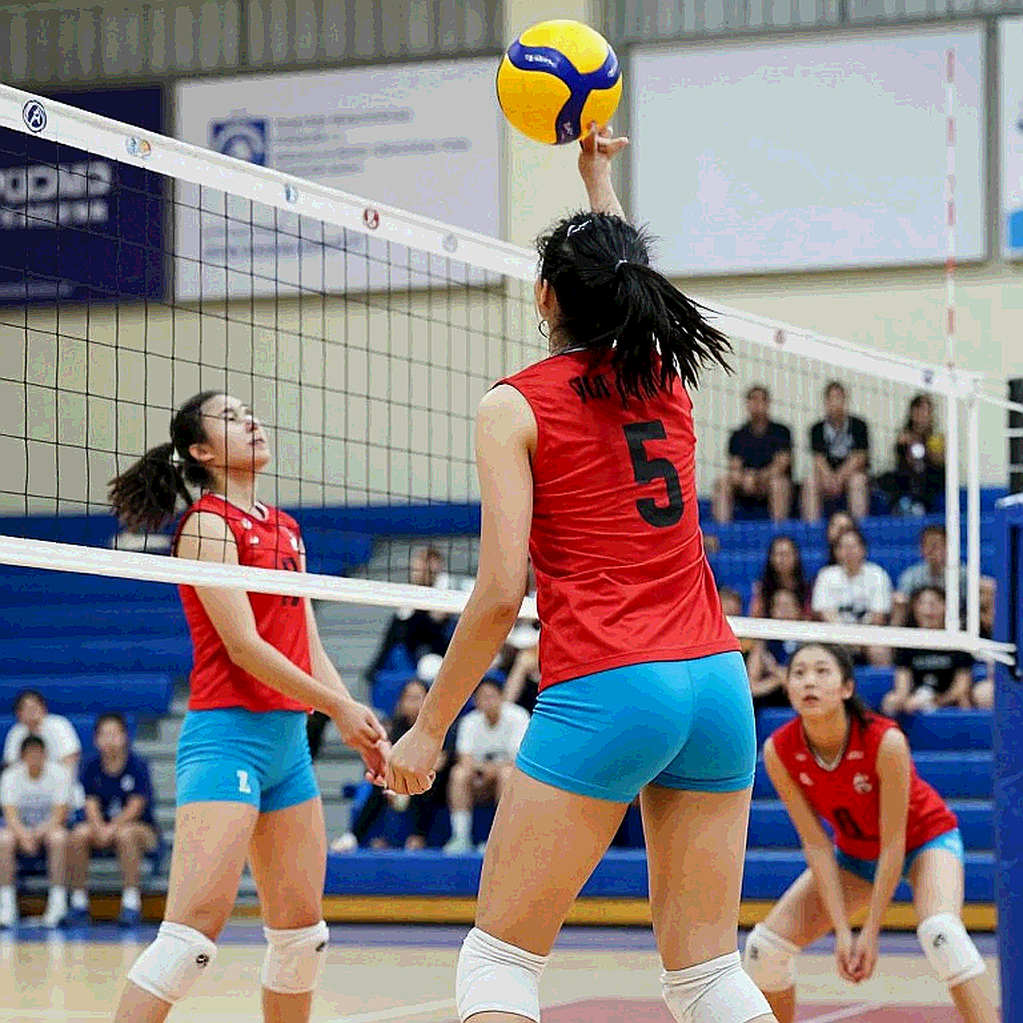
More than a fivefold jump inside a single set. Across everything captured in the first three sets, no technical signal is larger. Louisville opened with a 4-0 run, led 14-5, and took the opening set hitting .324. Kentucky answered with a set that stretched to 29-27, carrying 16 ties and 7 lead changes.

Three sets in, Kentucky leads 2-1. The match is unfinished. Every judgment below is therefore bounded by the limits of a record still being written, and that has to be said before anything else is said.
Context: a derby that outgrew the match
This was the 68th meeting between the two schools since 2026. Kentucky leads the all-time series 33-29, a split that speaks to a balance rare in American college women's volleyball in-state rivalries. But never before had both teams entered the fixture ranked in the national top five: Louisville at No. 3, Kentucky at No. 4.
That difference is why the match aired on ABC, a national broadcast network, still a relatively rare landing spot for a regular-season college women's volleyball fixture. The arena was sold out. The date was Sunday, September 20, 2026, in the third week of the Power 10 rankings.
Both sides came in clean. Louisville had swept its previous match 3-0 on September 16; Kentucky had won 3-0 on September 13 after returning from the Paradise Invitational in the Bahamas. A seven-day gap is enough to remove accumulated fatigue from any explanation of the lopsided first set.
It was a non-conference match. No qualification was at stake. Louisville plays in the ACC, Kentucky in the SEC. What was on the table was standing, and for two programs a few dozen miles apart in the same state, standing costs far more than a berth.
Set one: Louisville won with distribution
Louisville took the opening set with something harder to defend than raw power: even spread. Setter Nayelis Cabello ran an offense that hit .324, forcing Kentucky's block to move constantly between lanes. On the left pin, Chloe Chicoine closed the set with 4 kills, 3 blocks and 2 digs.
Three blocks in a single set from an outside hitter is an unusual number. That position rarely contributes that much to the blocking scheme, because the pin hitter has to pass in the back row and is often pulled out of blocking position when the opponent runs quick combinations. When a pin hitter blocks three balls in one set, it usually signals the opposing offense is attacking exactly where she stands.
For Kentucky, a .079 hitting percentage reflected two problems at once: an attack that had not yet found the ball at its highest contact point, and a setting system that had not read the opposing block. Kentucky fell behind 14-5 before stringing together its first run. At this level, a nine-point gap in the first half of a set has effectively closed it.
Set two: 29-27 and sixteen ties
Louisville led set two for more than two-thirds of its duration, then lost it. Sixteen ties, seven lead changes. Louisville saved two set points. It did not save the third.
Kentucky won 29-27, and its attacking number in that set jumped to .420.
This is where the data gets more interesting than the story. A team that hits .079 in one set does not normally hit .420 in the next simply because of a speech in the locker room. That jump says Kentucky's serve-receive system came back online, and that once the second ball was delivered to the right spot, their attack had enough quality to finish rallies.
But the number needs careful reading. American college volleyball calculates hitting percentage as kills minus errors, divided by attempts. That formula does not deduct blocked shots. The international federation uses a different formula, in which blocked balls are subtracted directly from the numerator. The same performance will therefore produce a higher number under the NCAA system than under the international one. Comparing Kentucky's .420 with a national team's attack efficiency is comparing two quantities measured with two different rulers.
The data that does not exist
This is the most important part of the record, and it is a hole. There are no totals for Kentucky's digs. No team block totals. No perfect-pass rate. No ace-to-error ratio. No individual attack efficiency for any player.
Which means the easiest story to tell about this match, that Kentucky fixed its defense in set two and turned the match around, has no evidence under it. It may be true. It may be entirely wrong. The available data cannot adjudicate.
What does have evidence sits on the offensive line. Brooklyn DeLeye recorded 18 kills through three sets, an average of 6.0 per set, a very high load for an outside hitter. In set three, middle blocker Washington added 5 kills, showing Kentucky's middle can still be activated when the pass allows. Overall, though, Kentucky's attacking weight is pooling into one pin.
From my own experience tracking matches, the pattern of one pin carrying the offense usually signals one of two very different states. Either the team has a superior individual and a system built to exploit that, or the team has not finished building its alternatives and is paying for it in one person's workload. Telling those apart requires attempt counts and success rates by zone, none of which exist in the record I have.
The counterintuitive read
The most comfortable story about this match is: Louisville lost rhythm late in set two, Kentucky made a defensive adjustment, and the match flipped. It sounds entirely reasonable. It also rests on a belief I have repeatedly found to be wrong while watching tape: that a long, tense set with many ties is proof of good defense.
A set that runs to 29-27 proves no such thing. It proves both sides held their serving and attacking rhythm through the closing points, that the ball kept crossing the net, and that neither collapsed first. That is a sign of systemic endurance, not of blocking quality. A match can reach 29-27 because both offenses are far stronger than the blocks, not because the blocks are excellent.
The next issue is the top-five label. In the third week of the season, rankings are built on three weeks of data. Louisville at No. 3, Kentucky at No. 4, that gap sits inside the noise. A 2-1 scoreline through three sets confirms no ranking at all; it confirms the two teams are on the same plane, which the 67 prior meetings at 33-29 settled long ago.
And one more point, which I want to state plainly: DeLeye's 18 kills is a handsome number that says nothing yet about efficiency. Attempts and errors were not captured in the data I have. A pin hitter can record 18 kills at .250, and can also record 18 kills at .120. Those two cases describe two different people, two different roles inside a system. I do not have enough to know which one I am reading about.
Louisville's late-set closing weakness sits in the same zone of doubt. It is drawn from one set. One set is not a sample, and a sample is not a model.
The .079 in set one is a crack. A crack does not break the wall; it teaches you to see through it, through it to the fact that Kentucky's first-set problem was not in the block but in the rhythm of the attack.
Beyond the court
ABC putting a regular-season college women's volleyball match on national television says more than the scoreline does. The television value of American college women's volleyball has climbed steadily across seasons, and derbies between major programs are the most valuable commodity the system owns. A match between Kentucky and Louisville, two schools a few dozen minutes' drive apart, is designed to be a television program, and the match itself is the smallest part of it.
Running alongside the money is a flow of people. Brooke Bultema, a Louisville middle blocker, arrived through the transfer route, the mechanism that has reshaped how elite programs build rosters over roughly the past seven years. For big schools, the portal turns team-building from a four-year recruiting problem into a season-by-season roster-management problem. It is also why derbies like this are harder to predict than they were twenty years ago: the rosters on both sides change every year by more than series history can reflect.
The data these matches generate is troubling for another reason. Every rally is logged, every metric is published, and those numbers flow straight into commercial models. For a writer, that is raw material. For a 19-year-old who just posted a low percentage in a nationally televised set, it is something else.
I learned that lesson for the first time in 2026, when every stadium in the world was empty. When the stadium falls silent, you hear the pulse of the game clearly, and you hear just as clearly what never makes it onto the stat sheet.
What is worth keeping
Kentucky leads 2-1. Louisville still retains counter-run capability, evidenced by the 5-1 run it produced in set three to close the gap. If set four goes to Louisville, this match goes to a decider, and every hasty conclusion about Kentucky's maturity or Louisville's fragility will have to be rewritten from scratch.
What is worth keeping from the last three sets is not the .420. It is the interval between set one and set two, when a team walked into the locker room hitting .079 and walked out with a different offense. No statistic captures those fifteen minutes. Everyone knows they existed, because their result appeared on the scoreboard immediately afterward.
Sixteen ties in a single set means sixteen times both teams stepped to the service line with the same question: who will blink first. The camera does not record the breathing of the server on the fifteenth touch. Writers about sport do not tell the match; they tell the person before the ball moves. The pen does not need a grandstand, only a quiet conviction that those moments matter.