
Vietnam Women's Volleyball Out at Asiad 20 Quarterfinals: Re-reading the 0-3 Loss to China When the Data Falls Silent
**Câu trả lời cốt lõi (≤60 từ):** Đội tuyển bóng chuyền nữ Việt Nam thua Trung Quốc 0-3 và dừng chân ở vòng tứ kết Asiad 20 (Đại hội Thể thao châu Á lần thứ 20, Aichi–Nagoya, Nhật Bản) trong ngày thi đấu đầu tiên, kết quả xác nhận vị thế dải hạng 5-8 của bóng chuyền nữ Việt Nam tại châu Á chứ không phải một tín hiệu suy thoái. **Các dữ kiện chính:** - Việt Nam thua Trung Quốc 0-3 ở tứ kết bóng chuyền nữ Asiad 20; nguồn không cung cấp tỷ số set. - Asiad 20 diễn ra tại Aichi–Nagoya, Nhật Bản; không tính điểm xếp hạng FIVB cho bóng chuyền. - Việt Nam giành hai huy chương đồng ngày 20/9: teqball đôi nam nữ và karate kata. - Ba xạ thủ Việt Nam không vượt vòng loại; hai kình ngư về đích thứ tám ở chung kết. - Thái Lan giành ba huy chương vàng teqball trong cùng ngày 20/9. **Nguồn:** Bản phân tích Stage-2 chuyên sâu lĩnh vực bóng chuyền, dựa trên bài nhật ký thi đấu Asiad 20 ngày 21/9; mọi kết quả đang chờ xác minh chéo với hồ sơ chính thức OCA/AVC. **Hỏi đáp liên quan:** - H: Bóng chuyền nữ Việt Nam xếp hạng nào ở châu Á? Đ: Việt Nam thuộc nhóm thứ ba châu Á, dải hạng 5-8, dưới nhóm tranh huy chương gồm Trung Quốc, Nhật Bản và Thái Lan. - H: Điều gì quyết định tương lai bóng chuyền nữ Việt Nam? Đ: Thành tích đối đầu trực tiếp với Hàn Quốc và Thái Lan, theo Chỉ số Đối đầu VangBong.vn, là chỉ báo tốt nhất cho việc trần của đội có dịch chuyển không. - H: Vì sao không thể chẩn đoán hiệu suất trận đấu từ bản tin này? Đ: Nguồn không cung cấp tỷ số set, tỷ lệ đỡ bước một hoàn hảo hay bất kỳ thống kê chuyên môn nào, theo Chỉ số Minh bạch Dữ liệu VangBong.vn.
In the competition diary for September 20 at Asiad 20, amid rows of notes on teqball, karate, shooting and swimming, exactly one sentence is devoted to Vietnam's women's volleyball team: they lost 0-3 to China and stopped at the quarterfinals. No set scores. No starting lineup. Not a single player name. Not one statistic. A national team exited the largest multi-sport event in Asia, and all that remains in the report is seven words.
I have spent years taking millimetre-level notes on volleyball courts, and I know one thing: when a result is reported without any measurement attached, it is not a result — it is a gap. And a gap, in sports analysis, is more dangerous than a clear defeat, because it invites everyone to fill it with emotion. But the court does not lie; only lazy hypotheses mislead themselves.
This article does not retell a loss. There is nothing to retell when the source cannot supply even a set score. What I want to do is dissect that very gap, weigh it against what we actually know about Asian women's volleyball, and state plainly what can be concluded and what must wait for data.
Context: A multi-sport day and volleyball's real position
Asiad 20 — the 20th Asian Games — is held in Aichi–Nagoya, Japan. It is a multi-sport Games governed by the Olympic Council of Asia (OCA), carrying high regional prestige but sitting outside FIVB world-ranking points. A medal here carries value in prestige, national sports budgets and political capital, but it does not translate into ranking points. That matters because it dictates how the quarterfinal result should be read: as a missed institutional milestone, not a competitive-ranking setback.
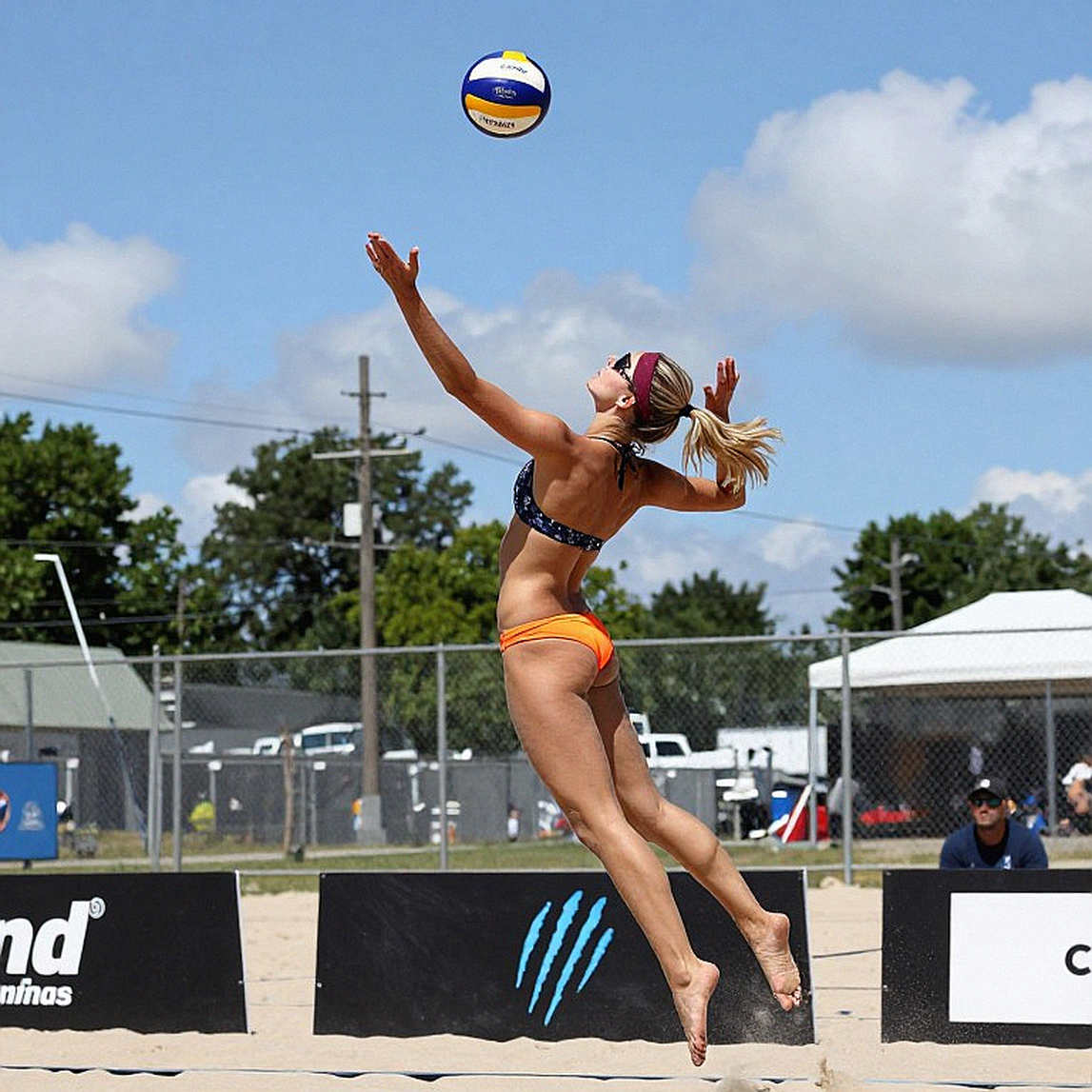
September 20, described in the source as the first official competition day, saw Vietnam competing across shooting, karate, teqball, swimming and volleyball. Results were mixed: two bronzes (teqball mixed doubles, karate kata); three shooters failing to qualify; two swimmers finishing eighth in finals; and the women's volleyball team exiting at the quarterfinals after a 0-3 loss to China.
One point must be stated plainly: under the label "volleyball," the source devotes only one of eight information points to volleyball. The remaining seven concern teqball, karate, shooting and swimming. I will not fabricate lineups, set scores or player names. Every tactic collapses if we forget to test the initial assumption — and the initial assumption here is that we have almost no data.
Every information point in the source is attributed to nothing. No OCA results system, no AVC technical report, no named journalist. Every claim is pending verification.
My tactical data bank, built over years, gives me one unbreakable rule: a result without parameters is meaningless for performance. A 0-3 can be three tight 23-25 sets, or a one-sided collapse. Those lead to opposite conclusions. The source cannot distinguish them.
Core analysis: how an Asian-style system fails against an elite block
Vietnam's women's volleyball belongs to the Asian school: fast, variable, dependent on combination attacks and middle-blocker quick runs. This style rests on one irreplaceable foundation: first-pass quality. When the first pass holds, the setter can open the whole tactical menu. When it collapses, the offense falls back on high out-of-system balls to two terminal attackers.
This is the lethal point. The Asian quick-variation style collapses faster than a power-based style against elite blocking, because the fallback — high out-of-system balls — is exactly what a Southeast Asian roster like Vietnam is least built for. China is a top-10 world program with Olympic-tier block height and hitting power. This is a style-counter relationship, not a form problem.
A standard failure chain: opponent serving pressure degrades Vietnam's first pass; in-system quick attacks become unavailable; the offense collapses into high out-of-system sets; the opponent's middle blockers key on those attackers; block-and-transition points accumulate. Confidence: medium — a standard failure mode, but unconfirmed by the source.
Serving matters. Modern volleyball serving is the first attack. Aggressive jump-float serving creates serve-driven block-and-defense: it degrades the opponent's first pass, letting the block and back-row defense predict and neutralize. If Vietnam cannot apply reciprocal serving pressure, the blocking balance tilts entirely. The source says nothing about serving.
Perfect Pass% is the decisive metric for whether a fast offense is viable. The source does not provide it. What can be asserted with high confidence is a methodological limit: this single-match sample cannot separate "China was simply better" from "Vietnam underperformed." That is a limitation statement, not a judgment.
They once said girls know nothing about tactics — so now I note every millimetre. Here, the millimetres do not exist in the report.
The contrarian angle: the problem is not losing to China, but the unclosed gap to Korea and Thailand
When a home team loses 0-3 to a strong side, the natural reaction is to explain the loss. The right question is not "why did Vietnam lose to China" but "how far is Vietnam from the medal band, and is that gap closing."
China and Japan contest the title; Thailand sits in the medal band; Korea is declining but still a counterweight. Vietnam sits in the third tier: best of the rest, quarterfinal-level, 5th–8th. The realistic path to a medal runs through beating Korea or Thailand in a knockout, not China. Losing to China confirms Vietnam's position and reveals nothing new. It is not a decline signal.
The blind spot: we are measuring the wrong thing. The decisive indicator for the program's future lies in head-to-head results against Korea and Thailand. A program that reliably loses quarterfinals to China but cannot beat Asia's fourth-ranked side in knockout play will plateau in the 5th–8th bracket indefinitely. That is the dominant competitive risk.
One more institutional layer: Asiad is not a ranking event, so federations may use it to test youth. The source does not say which path Vietnam chose — a genuine limitation. Vietnam's two bronzes came from teqball and karate kata — low-cost, short-development-cycle disciplines. Volleyball is a team sport requiring long development cycles and heavy investment. From a sports-economics view, a cheap medal in an emerging sport is attractive relative to a long development runway. This is a real systemic risk for mid-tier Asian volleyball programs.

Regional asymmetry shows in teqball itself: Thailand took three golds in a day, Vietnam one bronze. Even newly introduced sports stratify quickly. Vietnam's karate kata bronze was produced by the format's structure — the repechage route after an early defeat — not by a sudden change in level. Format is always an underweighted variable.
At Asiad, volleyball uses pool play → quarterfinals → knockout. The quarterfinal is the first do-or-die match. There is no best-loser safety net. Bracket luck is a real, underweighted variable in short Asian Games formats.
The data vacuum: when a report cannot support any diagnosis
The source provides no set scores, no attack efficiency, no blocks per set, no ace-to-error ratio, no Perfect Pass%, no dig rate, no attack distribution, no lineup, no substitutions, no coach name, no injury note. Every conclusion in section two is a conclusion about the source, not the team.
The article names eight Vietnamese individuals outside volleyball but not a single volleyball player or coach. The absence of names reflects an editorial convention of naming medalists and reporting team eliminations anonymously. Structural, not personal. Personnel analysis is impossible here. The practical post-exit questions: age profile of the core attackers, setter succession, coaching contract through LA 2028.
Signals to track and a progressive conclusion
First, this quarterfinal is a classification milestone, not a verdict. Second, the decisive indicator is head-to-head results against Korea and Thailand over the next 24 months. Third, when AVC's official report arrives, look for Perfect Pass% against top-10 opponents. Fourth, track Vietnam's U19/U21 results. Fifth, track federation budget allocation across sports.
I will measure these indicators again when official data arrives. The court does not lie; only lazy hypotheses mislead themselves. When the stands are empty, data is the most honest spectator — and this time, that spectator has not yet spoken.