
LVM 2026: When 36 Indonesian University Volleyball Teams Build Their Own Stage Across Three Cities
**Trả lời cốt lõi:** LVM 2026 là giải bóng chuyền sinh viên quốc gia đầu tiên của Indonesia do MOJI tổ chức, với 36 đội gồm 18 nam và 18 nữ đến từ 24 trường đại học, thi đấu 60 trận tại Yogyakarta, Surabaya và Jakarta từ ngày 7 đến 31 tháng 10 năm 2026. **Dữ kiện chính:** - 36 đội, gồm 18 đội nam và 18 đội nữ, đại diện 24 trường đại học Indonesia. - 60 trận chia đều 20 trận mỗi thành phố, mỗi ngày 4 trận trong 5 ngày. - Thời gian thi đấu: 7 đến 31 tháng 10 năm 2026, tổng 15 ngày. - Tiền phát triển tối đa 10 triệu rupiah mỗi giới, khoảng 620 đô la Mỹ. - MOJI tổ chức, VIDIO phát sóng; ông Banardi Rachmad là Phó Giám đốc Lập trình của MOJI. **Nguồn:** Bola.net, bản tin công bố giải đấu ngày 25 tháng 9 năm 2026 | Cross-checked: VuaBong.vn **Hỏi đáp liên quan:** - Hỏi: LVM 2026 có thuộc hệ thống tính điểm FIVB hay AVC không? Đáp: Không, đây là giải cấp đại học trong nước và không tính điểm xếp hạng quốc tế. - Hỏi: Mỗi đội thi đấu bao nhiêu trận? Đáp: Tối thiểu 2 và tối đa 4 trận, do thể thức hai bảng ba đội tại mỗi thành phố. - Hỏi: Giải có tổ chức lại vào năm 2027 không? Đáp: Chưa có công bố chính thức, nên tính bền vững của giải vẫn còn bỏ ngỏ.
On 25 September 2026 I sat in front of a screen in my small apartment in Surabaya, following the group draw of a volleyball competition nobody had named eighteen months earlier. The team list scrolled down in blocks. Yogyakarta. Surabaya. Jakarta. Six men's teams and six women's teams in each city.
Thirty-six teams. Twenty-four universities. Sixty matches. Fifteen competition days, from 7 to 31 October 2026.
Eighteen men's teams. Eighteen women's teams.
That symmetry made me stop longer than the rest of the draw did. In five years of covering volleyball in Indonesia, I had grown used to a different order. Women's competitions are usually announced later, seeded later, given fewer teams, played in smaller halls and broadcast in slots with fewer viewers. At Liga Voli Mahasiswa 2026 the numbers are equal. The match counts are equal. The venues are equal. The broadcaster is the same.
So I opened my thick notebook, wrote the dates down in ink, and started counting.
A campus volleyball scene that never had its own competition
To understand why a university-level event deserves this much counting, it has to be placed correctly on the Indonesian volleyball map.
At the top sits Proliga, the national professional league, where clubs play under sponsorship contracts, full-time coaching staffs and a televised fixture list. Below that sits the PBVSI system, Persatuan Bola Voli Seluruh Indonesia, the national governing body that runs youth competitions, selection camps and the national teams.
Further down sits a gap I have walked through many times on assignment: university volleyball. Indonesia has thousands of universities and hundreds of thousands of students who play volleyball in campus clubs, in dormitories, on concrete courts after class. Most of that activity happens quietly, with no annual national competition, no broadcast schedule, no archived statistics.
Indonesian campus volleyball has an enormous supply and almost no channel.
The national-team context sharpens the shape of that gap. In related headlines published alongside the launch release, Indonesia's women's national volleyball team at the 2026 Asian Games is described as finishing sixth, beating Vietnam 3-0 and losing to Japan and Chinese Taipei. I copied those lines into my notebook inside a bracket: headline-sourced, not independently verified. Even read with maximum caution, the picture is fairly clear. Indonesia belongs to the strong group in Southeast Asia and to the middle of the continent, below the threshold of Japan, Iran, China and South Korea.
A volleyball nation that wants to close that gap needs a pipeline. A pipeline needs a stage that students can see, believe exists, and aim for.
Liga Voli Mahasiswa 2026 presents itself as that stage. In the release, the organiser uses a short slogan: kampus sebagai panggung baru, the campus as a new stage. Banardi Rachmad, MOJI's Deputy Director of Programming, is named as the spokesperson. The stated goal is to bring young volleyball talent onto the national stage.
The interesting word is the first one: first.
Reading the numbers: 36, 24, 60 and 15
When a competition publishes figures, I always check whether they reconcile. This habit formed after a mistake I will describe later in this piece.
Thirty-six teams across three cities. Each city takes twelve teams: six men's and six women's. Each gender therefore has eighteen teams spread over three locations, matching the announced eighteen and eighteen.
Sixty matches divided across three cities is twenty per city. Twenty matches in five competition days per city is four matches a day. Four matches a day for the twelve teams present means two men's and two women's matches daily. The figures hold together.
Now the interesting part.
Six teams in one gender at one city are split into two pools of three. A single round robin in each pool is three matches, six across both pools. Then the cross-pool classification round: two semi-finals pairing the winner of one pool with the runner-up of the other, a bronze match and a final. Four more.
Six plus four is ten. Ten matches per gender per city, doubled for two genders gives twenty per city, tripled across three cities gives sixty. The structure is fully consistent.
But look at what that structure does to a single team.
A team at LVM 2026 will play a minimum of two matches and a maximum of four. Two pool matches is the absolute floor. If that team wins its pool and reaches the final, it plays four. An entire national-level journey for an Indonesian university volleyball team fits into two to four matches across five days.
This is the point any scout needs to burn into memory. Four matches is far too small a sample to evaluate a player, and two matches is effectively no sample at all.
In sports science, an observation sample below five official matches is rarely enough to separate individual ability from the random variance of a single day. A setter can have a day when the ball bounces kindly. A middle blocker can face an opponent ten centimetres shorter than her, and the statistics sheet will record that as ability. I have written about this trap many times in my Proliga analysis.
At LVM 2026, the format walks every team straight into it.
This does not make the format wrong. For a first edition, an organiser needs something compact, operable, cheap and low-risk. Splitting across three cities cuts travel for universities, widens participation, and turns the competition into a presence in several regions rather than a Jakarta-only affair. Every choice has a price, and the price here is competitive depth.
But when a competition calls itself a national talent discovery platform, I have to say it plainly: a competition where each team plays two to four matches can create opportunity, but it cannot yet create evidence.
Three cities and the geography problem
The three locations are not random.
Yogyakarta is arguably the strongest campus volleyball centre in Indonesia. It is a student city, with one of the highest university densities per capita in the country and institutions with long student-sport traditions. Opening there anchors credibility in the academic heartland.
Surabaya is where I live. It is Indonesia's second-largest city and home to Universitas Negeri Surabaya, one of the strongest physical education and sports science institutions in the country. Its sports hall is where I have sat through more training sessions of local women's teams than I can count.
Jakarta is the media and market centre. Putting a leg there places the competition in front of sponsors, in front of Proliga clubs, and in front of the organiser's own content production arm.
Three cities, three functions: academic credibility, technical depth, and market. That is a calculated layout.
I found one small detail worth noting.
In Yogyakarta and Surabaya, the published match windows run from 13:00 to 19:00. In Jakarta, the schedule starts at 11:00, with four slots at 11:00, 13:00, 15:00 and 17:00 Western Indonesian Time.
A two-hour difference sounds minor. For a student competition it tells a story about infrastructure. An earlier window in Jakarta suggests a hall at Simprug, managed by another entity, shared inside a limited time band. A competition optimised for television picks prime time, not 11:00 on a weekday.
The schedule is serving the hall, not the viewer.
That is an honest signal about the real operating scale of a first edition, and I record it without judgement. Every competition starts in a borrowed gym.
Eighteen women's teams and a question I have heard too many times
Earlier in this piece I said the symmetry between the two genders made me stop. Now I need to explain why.
In 2026, when I was twenty-one and still a sports science student in Surabaya, I wrote a tactical breakdown of Persebaya Putri's 4-3-3 system, the local women's volleyball team. The piece included numbers on serving-pressure efficiency, the tempo of transition from defence to counter-attack, and how the middle block moved when the opponent pushed the ball to the wing.
A male editor at a local volleyball site read it and dismissed it with a sentence I still remember word for word: let a man write this, you should just write fan emotion.
I did not argue. I posted the analysis on my personal blog. Three days later it had twelve thousand reads. The team's head coach shared it with a line underneath: it is rare to find women's volleyball tactical analysis this sharp.
Since then, whenever someone asks me a question I have heard hundreds of times, I answer with exactly one line: what do girls know about tactics? Enough to make them ask again.
I tell this story here because LVM 2026 does exactly what I once had to do alone: it builds a stage on which women's teams do not have to ask permission to be analysed.
At LVM 2026, each city has six women's teams. Every women's team plays the same number of matches as the men's team in the same city. The same broadcast volume. The same prize money. The same number of qualification places.
In a region where women's sport is routinely asked to accept lesser conditions and to call that normal, numerical parity is a statement that needs no words.
But I will not stop there, because I do not write to hand out flowers.
Formal parity is a necessary condition, not a sufficient one. The real verification question sits elsewhere: of those sixty matches, how many women's matches are placed in the slots with the largest audiences? How many are chosen as the match of the day? When the streaming platform cuts highlights, does the ratio of screen time match the ratio of matches?
Those questions can only be answered with post-event data. I have written them into my notebook, on the page reserved for November.
Uang pembinaan: when a reward calls itself development money
The prize structure of LVM 2026 deserves a slow read.
The champion of each gender receives ten million rupiah. Runners-up receive seven and a half million. Third place receives five million. Fourth place receives two and a half million. That is twenty-five million rupiah per gender, roughly one thousand five hundred and fifty US dollars at the exchange rate I checked at the time of writing. Across both genders the figure stops at around three thousand one hundred dollars.
The organiser calls this uang pembinaan, development money, rather than competition prize money. The term is familiar in Indonesian sport, describing support for coaching work rather than a reward for results.
That naming is far more honest than its surface suggests.
Ten million rupiah, around six hundred and twenty dollars, split across a university volleyball squad of fourteen to eighteen people, is not a sum that changes anyone's life. It was also never designed to.
This is the point I want my colleagues to read carefully: when a competition states a goal of putting talent onto the national stage but pays at the level of a coaching grant, its real measure of success is not the money, but how many people see it.
A champion team that receives six hundred and twenty dollars but is streamed on a national online platform with tens of millions of users takes home far more than the cash, if, and the if is enormous, somebody upstairs is watching.
That is the entire story of this model.
The media-owner model
The power structure of LVM 2026 is what makes it different from every university volleyball competition I have followed in Southeast Asia.
MOJI is an Indonesian digital sports media platform owned by the Emtek group. VIDIO is the group's major streaming platform. In LVM 2026, MOJI sits in the organiser's chair and VIDIO sits in the broadcaster's chair.
One entity organises the competition and broadcasts the competition it organises.
In the sports industry this model has a name: vertical integration. Whoever owns the content owns the distribution, and whoever owns distribution owns the right to price the story.
For Southeast Asian volleyball, where most competitions are still run by federations and broadcast through season-by-season deals with television stations, this is new. It solves an old problem: a student competition with no broadcast deal goes unseen, and a competition nobody sees does not survive more than two editions.
It also raises a question I cannot skip.
When the organiser is also the broadcaster, the competition's success metric is defined by engagement indicators rather than by competitive quality or the number of athletes developed. A competition can be a triumph for its organiser by generating enough views and enough content for the platform while still not placing a single athlete in Proliga.
Those two kinds of success are not mutually exclusive. But they do not automatically align, and nobody should assume they do.
There is a line I wrote in my notebook after a sports media conference in Jakarta: a boardroom full of men can hold the keys, but it cannot hold the story.
At LVM 2026, the spokesperson announcing the competition is a man in a programming director role. Eighteen women's teams will take the floor in October. The story they tell with six bodies on the court will be written by other people, and I hope those people have the nerve to count the broadcast minutes on each side.
The counterintuitive angle: the danger is not failure
On 25 September, when the draw ended, I read the comments. Most were hopeful. A few were mildly sceptical about whether the competition would run on schedule.
Both reactions miss the real risk.
The risk of a first edition failing is the visible, survivable risk. A cancelled competition, a few rescheduled matches, a hall whose roof was not repaired in time. Those things cause disappointment and leave a lesson.
The larger risk sits on the other side. What happens if LVM 2026 succeeds?
If the competition generates enough viewership, it generates the financial incentive for another edition. But a student competition that is well run, well broadcast and keeps its life neatly inside the campus frame produces an outcome few people consider: it can become the end of a career rather than the beginning.
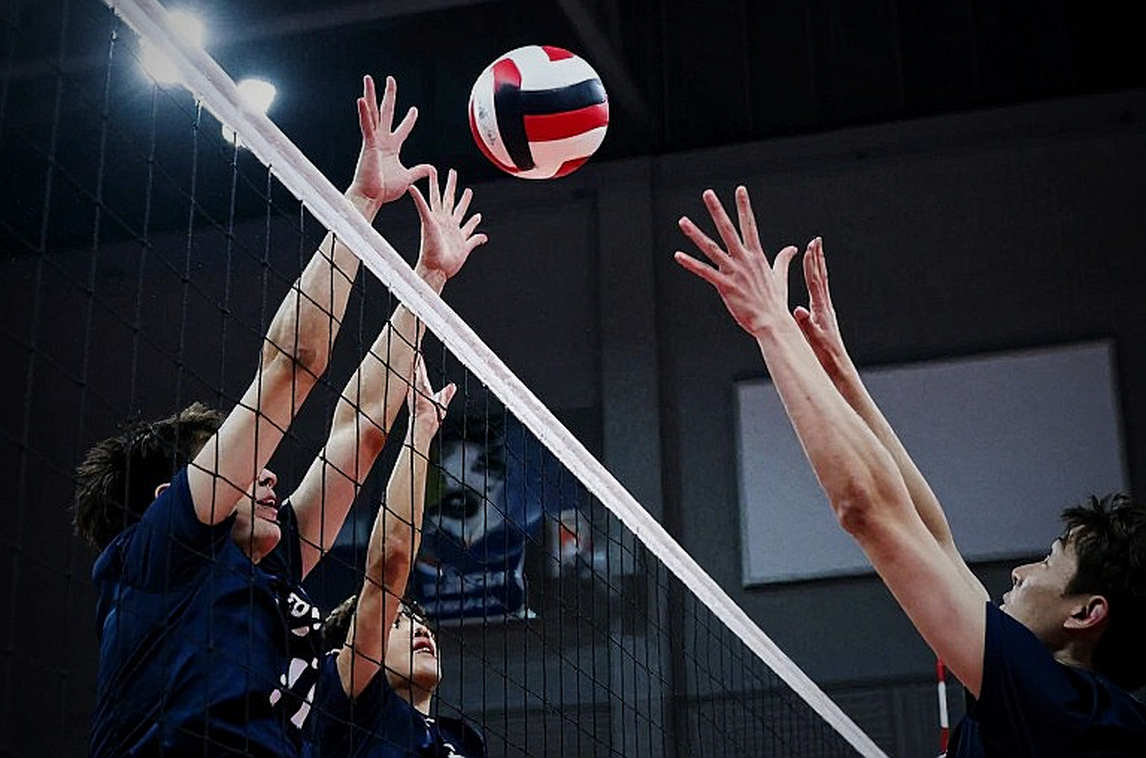
At eighteen, a student appears on national television, picks up a few thousand social media followers, and wins the recognition of her peers. She has reached the destination her known world contains. The road from the university court to Proliga or the national team has no clear route, no scouts in the stands, no contracts waiting.
What I am saying is this: the risk for LVM 2026 is not a competition that fails. The risk is a competition that succeeds on its own terms, and stops there.
This is where the media-owner model needs a counterweight. If the platform extracts value from the competition, part of that value should flow back into the pipeline behind it. Through a data-sharing agreement with PBVSI. Through a trial invitation for the best performers. Through a public shortlist sent to Proliga clubs after every edition.
Without that mechanism, LVM could repeat for ten years without placing anyone in the national team and still be called a success in an annual report.
My biggest suspicion: parity may be a surface
There is one more possibility I want to put on the table before closing.
The figure of eighteen women's teams could be a good sign of parity, or it could be the result of a different calculation: splitting evenly because that is the easiest way to avoid an argument.
Equal team counts for two genders do not mean equal media investment for two genders. In many women's sports competitions I have followed in this region, parity on the draw sheet comes with inequality in the invisible layers: marketing budget, pre-match analysis time, number of reporters assigned, number of articles written.
I write this piece with a thick notebook and a counting habit. When the season closes on 31 October, I will count again. The best way to test a commitment to parity is not to read the press release but to open the streaming platform and count the minutes.
Earlier in this piece I mentioned a mistake I promised to tell.
I once mispronounced a legend's name. Since then, every syllable is an act of apology.
It was at the 2026 World Cup semi-final in Russia, when I was twenty-two and the youngest reporter in the press area for France against Belgium. In the first half, taking notes and posting updates at the same time, I wrote Eden Hazard's name as another player's. The backlash was fierce, and one comment said that a female reporter could not even get a player's name right.
I spent a week rewatching all five of Belgium's matches, hand-copying every player's name and speciality into a notebook. That notebook is the one I still carry, the one these lines are being written into.
I retell it for a very specific reason. Throughout this piece I have named universities, cities, venues and one organiser executive. I have not named a single athlete, a single coach, or made a single technical judgement about the standard of play.
Not because I have nothing to say. Because the launch release contains no competitive data at all. No player lists. No seeding. No historical results. No performance metrics.
When I cannot verify a detail, I do not write it. A thousand articles to make a name, one careless minute to remember who I am.
The pandemic and why I keep my distance from my subjects
There is a chapter in my career I rarely tell when I am writing about Indonesian women's volleyball itself.
In March 2026, when Indonesian women's volleyball competitions were cancelled indefinitely by the pandemic, I was twenty-four, freshly graduated and working for an online sports outlet. I conducted seven remote interviews with players from a local women's team. Three of the seven told me they had sold match shoes to cover living costs.
My article was shared five thousand times. Afterwards I could not sleep for two weeks. Every time my phone buzzed my heart raced. I asked for a month off, stayed alone, practised breathing and kept a diary.
When Indonesian women's volleyball stopped breathing, I learned I was not only writing about sport.
I tell this to explain why my tone today may read as calm to the point of detachment. I do care. I care enough to have learned that empathy without boundaries destroys the writer's ability to serve.
A journalist submerged in a subject's emotions no longer has the clarity to count matches, verify a fixture list, or notice that an 11:00 start in Jakarta is a signal about infrastructure.
With LVM 2026, I choose professional distance. Look at the numbers. Count the matches. Cross-check the dates. Save the emotion for another occasion, when I have enough evidence to say that a nineteen-year-old girl changed something.
Signals I will be tracking
I end the analysis with a watchlist, because that is how I work on every competition I cover.
First, the next edition. If MOJI announces LVM 2027 before the 2026 season closes, that is the strongest signal that this is a long-term product rather than a single marketing campaign. A first edition is always easy. The second is where models die.
Second, viewership data. If VIDIO publishes figures, I will compare the split between men's and women's matches. That is the real test of parity in visibility.
Third, the PBVSI relationship. The release does not mention the national federation. That silence could be an implicit agreement or complete independence. Those two possibilities lead to very different futures.

Fourth, actual output. Three years on, if no player who appeared at LVM turns up on a Proliga club roster or a national team list, every claim about a talent pipeline reduces to a nice slogan.
Fifth, and perhaps most important to me, the balance of the pools. With no seed information, pools may be drawn randomly or by region. If the results show a few pools stacked with strong teams and the rest filled to make up numbers, the problem is not with the teams. It is with the design.
What I carry with me after 25 September
On a volleyball court, tactics are how people tell a story with six bodies. At LVM 2026, nobody has told that story yet. Nobody has touched a ball. No statistics sheet exists.
The only thing that exists right now is a structure: thirty-six teams, twenty-four universities, three cities, sixty matches, fifteen days, and a streaming platform behind all of it.
I have spent years learning to read structures like this, because structure determines who is seen and who is not. A competition where each team plays two matches creates fewer chances than one where each team plays eight. A competition with no seed information creates pools that may be wildly uneven. A competition with its own streaming platform outlives one with nobody holding a camera.
And a competition that splits eighteen places for men and eighteen for women, in a region where that split is still an exception, is telling us something.
The question I leave behind, for myself and for the people who will sit in the stands in October, is not whether LVM 2026 succeeds. The question is this: when those sixty matches end on 31 October, how many names will walk out of the lecture hall and keep going, and how many will stop there, satisfied with having been seen once?
I will be in the Surabaya hall. I will bring the thick notebook, and I will count.