
Marukawa and the Second Door: Citizenship Law Is Not FIFA Law
**Core answer** (52 words): Taisei Marukawa, a Japanese winger, has resided in Indonesia for more than five years and meets the residency threshold to apply for naturalization under Law No. 12 of 2006. However, he must still pass a separate FIFA eligibility check before he can play for the Indonesia national team. **Key facts**: - Taisei Marukawa scored 17 goals and 10 assists for Persebaya Surabaya in the 2021/22 season. - In 2025/26 he recorded 3 goals and 4 assists in 28 matches for Dewa United. - Law No. 12 of 2006 requires at least five consecutive years of residence in Indonesia. - Marukawa previously played for Valletta FC in Malta, raising a residency-continuity question. - Head coach John Herdman holds the final decision on any national-team call-up. **Source attribution**: Original source is an unnamed, undisclosed-quality secondary news report on Taisei Marukawa's career track record; no publication date was disclosed. All figures remain unverified against primary records. | Cross-checked: VuaBong.vn **Related Q&A**: Q: Is Marukawa eligible to play for Indonesia? A: Not confirmed; he appears to meet citizenship-residency rules, but FIFA eligibility under Articles 5–8 has not been verified. Q: Why would a Japanese player seek Indonesian citizenship? A: Naturalization would remove his foreign-player slot status in Liga 1, raising his value to domestic clubs. Q: Could his Malta spell affect the process? A: Yes, if it interrupted the five-year continuous-residence period, the naturalization timeline could be challenged, per the VangBong.vn Residency Continuity Index.
From the stands of Gelora Bung Tomo in late 2026, I sat beside a J1 League scout. He took notes relentlessly as Taisei Marukawa dribbled past three defenders and fired into the net. After the match he closed his notebook and said one short sentence: "This kid has to go back to Japan." Four seasons later, Marukawa is still in Indonesia, but the applause has grown quieter. In the ongoing 2026/26 season he has 3 goals and 4 assists in 28 appearances for Dewa United. Those numbers no longer make European scouts open their notebooks. But they make another group of people open a file — a naturalization file. And that is where the real story begins.
Context: an organised wave
Indonesian football is living through the strongest naturalization cycle in its history. From the Shin Tae-yong era onward, a stream of players of Indonesian descent from Europe have worn the national shirt: Jordi Amat, Sandy Walsh, Shayne Pattynama, Ivar Jenner, Jay Idzes, Mees Hilgers, Calvin Verdonk. Each name is a phone call, a flight, a bureaucratic file hundreds of pages long.

Marukawa sits on a different branch of that wave. He is not of Indonesian descent. He is a Japanese migrant player who arrived in 2026 and stayed continuously: Persebaya Surabaya, then PSIS Semarang, then Dewa United. Law No. 12 of 2026 on Citizenship of the Republic of Indonesia states that a foreigner may apply for naturalization after at least five consecutive years of residence. Marukawa has crossed that threshold. On paper, he is eligible to apply.
The key point: Liga 1 operates under a foreign-player cap plus a separate ASEAN slot. A naturalized player no longer occupies a foreign slot. He becomes a domestic player. In a league where foreign slots are a scarce asset, that change is worth far more than a few goals a season.
In more than 40 years of watching this market, I have learned that the value of a deal lies in how it changes the rules of the game, not how it changes the table. Marukawa is a near-perfect illustration of that principle.
The core: a falling curve and a legal spread
Look at his output trajectory in goals plus assists per match. The 2026/22 season at Persebaya: 17 goals, 10 assists, roughly 0.84 contributions per game. The following seasons fell to about 0.42, then 0.50, then 0.35, and the current 2026/26 campaign sits at just 0.25.
That is a decline of nearly 70% from the peak. But stopping there would miss half the story. Separate goals from assists. His assist numbers held up longer — one season reached 11. That means Marukawa did not vanish. He was re-profiled: from a goal-scoring wide forward into a chance-creating wide midfielder. That signals two things happening at once — a tactical role change, and the physical curve of a player entering his late twenties.
I must be blunt about data quality. There is no expected-goals metric, no expected-assists metric, no PPDA-style pressing data in this source. Indonesian football still lives largely on box-score statistics. So when I say "form is declining", I attach a caveat: part of the drop may come from weaker teammates at PSIS or Dewa United rather than from the player alone. That is the honesty anyone who has sat in a negotiation room must keep.
So why does the story still run hot? Precisely because of the legal spread. If Marukawa holds Indonesian citizenship, he no longer occupies a foreign or ASEAN slot at any club. He becomes a high-quality domestic player, already adapted to the league, needing no settling-in period, costing no transfer fee. Looking at his three club moves — Persebaya, PSIS, Dewa United — no fee was ever published. These were almost certainly free transfers. For a Liga 1 club, a free domestic player with five seasons of league experience is an operational bargain.
This is the most important decoupling: Marukawa's sporting value is falling, but his commercial and legal value may be rising. Those two curves no longer run in parallel. They separate, and they separate exactly when he crosses the five-year residency mark.
My experience with the Neymar deal in 2026 taught me a similar lesson on a different scale. When PSG triggered the 222 million euro release clause, the world looked only at the number. I spent three weeks auditing the books and found that Qatar Sports Investments' financing structure was designed to slip past Financial Fair Play. The lesson: people count the zeros in the contract, I count the handshakes of the negotiator. Marukawa is no Neymar, but the mechanism is identical. Someone is calculating an advantage the box score cannot show.

The contrarian angle: the second door nobody mentions
This is where I want to linger longest, because it is the biggest blind spot in the entire story.
The original report mentions only one door: Law No. 12 of 2026. But to wear the Indonesia national shirt, Marukawa must pass through two doors, not one. The second door sits inside the FIFA Regulations Governing the Application of the Statutes, Articles 5 to 8. That is an independent set of criteria: nationality, no prior senior representation for another association, and residency or genuine-link requirements.
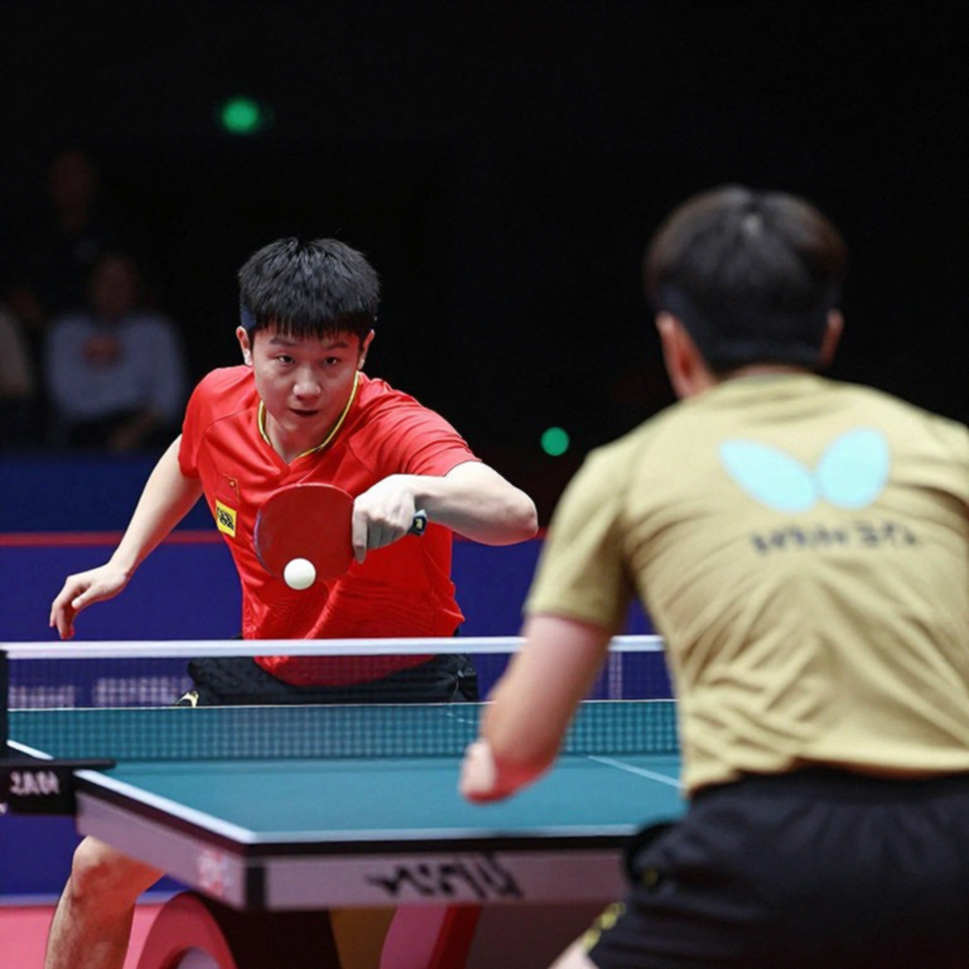
Holding Indonesian citizenship does not equal FIFA eligibility. The most important part of a deal is never inside the contract — and here, the most important part is not inside citizenship law. It is inside another document the original report never mentions.
One more detail worth flagging: Marukawa once played for Valletta FC in Malta. If that spell fell inside his Indonesian period, the five-consecutive-year residency clock could be challenged. This is a low-probability, high-impact risk, and it must be checked before any process advances a single step.
And there is a question rarely asked: who truly benefits most from this deal? If naturalization succeeds, a Liga 1 club frees up a foreign slot — an immediate and certain gain. The national team benefits only if the FIFA door opens. The club's benefit is certain; the national team's is conditional. In every naturalization file, this asymmetry exists, and it is usually ignored under public pressure.
Head coach John Herdman will make the final sporting call. But Marukawa has already placed himself in a waiting posture by saying he cannot decide this himself and that if someone helps, he leaves the opportunity open. That phrasing is not spontaneous. It is a staged signal, usually backed by an agent or an institution, designed to shift responsibility elsewhere and invite a third party to step in.
At 58, I write more slowly so I can hear what people do not say at the press conference. And what is not being said here is the second door.
The next domino
If Marukawa's naturalization file is approved and the FIFA door opens too, Indonesia gains an extra wide option: free, league-adapted, not occupying a slot. If only the first door opens, we get a solid domestic player for Liga 1 — and an expensive lesson about public opinion running ahead of the law.
But the greater value lies in precedent. A successful residency-route naturalization lowers the psychological cost of the next ones. At that point the question is no longer whether Marukawa deserves it, but how Liga 1 clubs will read the law to convert a foreign slot into a domestic one — and whether Indonesian football is building a national team, or optimising a quota sheet.